Canary in the Coal Mine: Increase in Great White Shark Population is a GOOD Sign for Southern California

All photos courtesy of California State University-Long Beach’s Shark Lab.
All photos courtesy of California State University-Long Beach's Shark Lab.

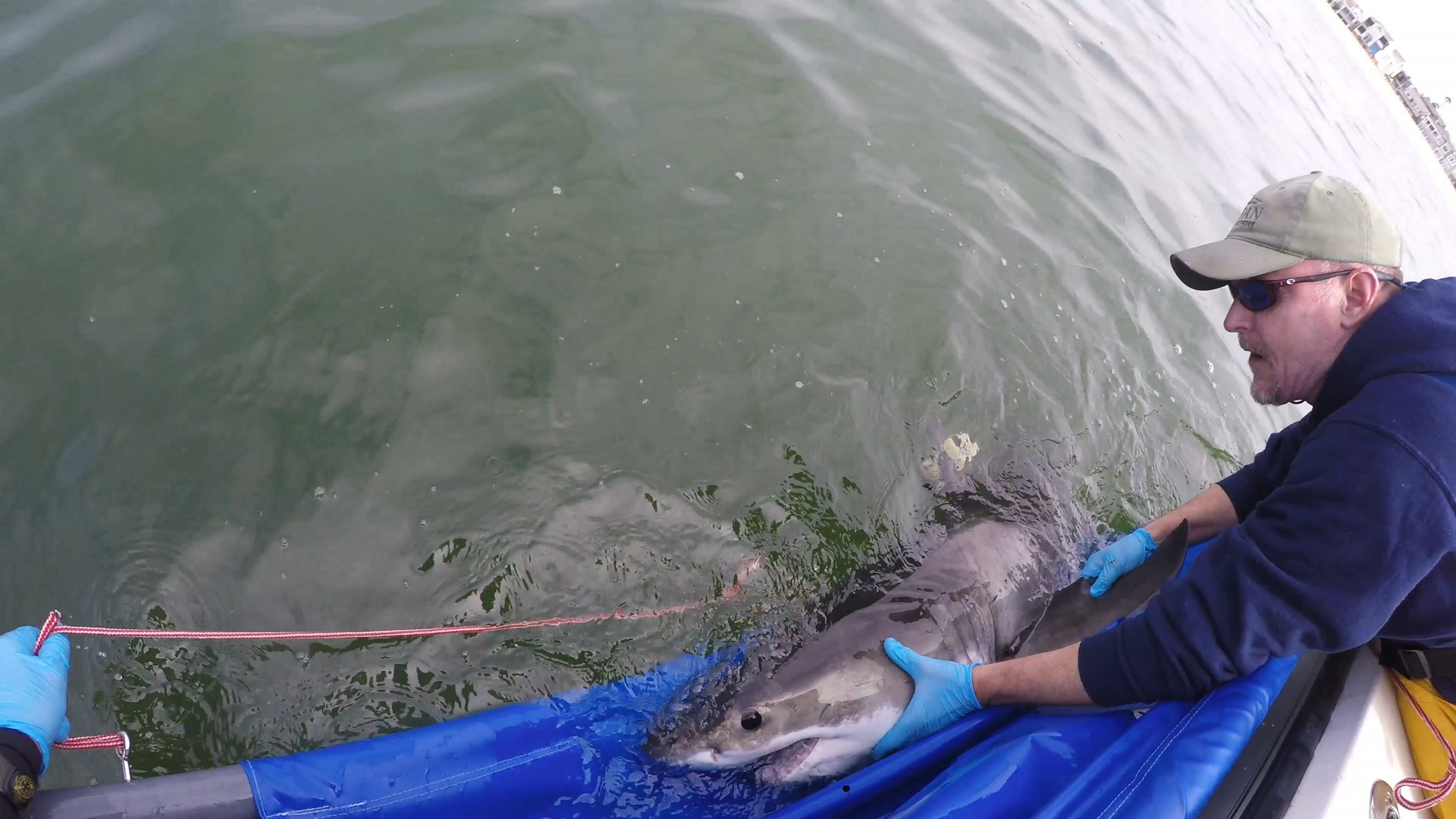
Dr. Chris Lowe releases a juvenile white shark after successfully affixing a “smart tag” on its dorsal fin. 

As surfers and aqua/nature junkies, our interaction with the ocean and it’s wildlife plays a huge role in our peace of mind. If you’re any kind of nature enthusiast, you know that the ocean can be a serene place that can quickly turn into your worst nightmare. But once you choose to recognize both sides of this personality coin, the “Dr. Jekyll and Mr. Hyde” aspect is seemingly understood and accepted.

The bottom line is: No matter who you are or what you do, mother nature always schools us. ALWAYS.

Great white sharks are one of the most mysterious and evolved predators on the planet and, despite the overblown hype (read “Hollywood”), we know so little about their lives beneath the waves. Sharks are always lurking in the back of our minds, our thoughts fashioned by Hollywood’s wildest Sharknado fantasy. As of late, Southern California has acquired quite a bit of ‘shark media’ due to a tragic collision with our grey-suited landlord doing it’s “shark thing” and a young lady at San Onofre’s Church break doing her “human thing.”

{Read: Surfline’s exclusive interview with her here.}

Through the whispers of sightings that circulated our lineup gossip combined with mainstream media salivating over chunks of info/news leads, I craved scientific explanation and education.

A real encounter, much less an actual attack on a human is extremely rare…until recently, I thought.

After the attack, beach closures ensued every other day, surf reports included the latest shark spottings along with the shark’s observed behavior, lifeguard boats and coastguard helicopters constantly combed the coastline, and surf lineups became an uneasy, quieter and more vigilant space. The fear of great white sharks exploded into the public’s conscious as what felt like a scene from JAWS.

I CONFESS: for a hot minute, surfing in San Clemente felt like visiting Amity Island for the Fourth of July.

The difference being that no one is actually “lining up to be a hot lunch.”

The April 29th attack at San Onofre conveyed a logical and obvious conclusion, which was based on a classic case of mistaken identity that nearly cost the woman her life.

But we forget that for the past 15 million years, this toothy creature has been cruising the ocean as sort of a “clean up crew” doing the same thing it knows best: eat and make little sharks.

But why are we seeing more of our toothy acquaintance??

“It becomes difficult to empirically determine what the great white shark population numbers are,” said Professor, Marine Biology, California State University-Long Beach and The Cal State Long Beach Shark Lab Director Dr. Chris Lowe. “Based on our data, which uses a combination of fishery’s data, marine mammal bite data and human observation, the population is increasing.”

Recently featured on The Discovery Channel’s Shark Week in the  “Sharks and the City: LA” episode, we watched Dr. Lowe observe giant adult great white sharks from a steel cage in the chilly waters off of Guadalupe Island, which is located off of Baja’s Northern coast.
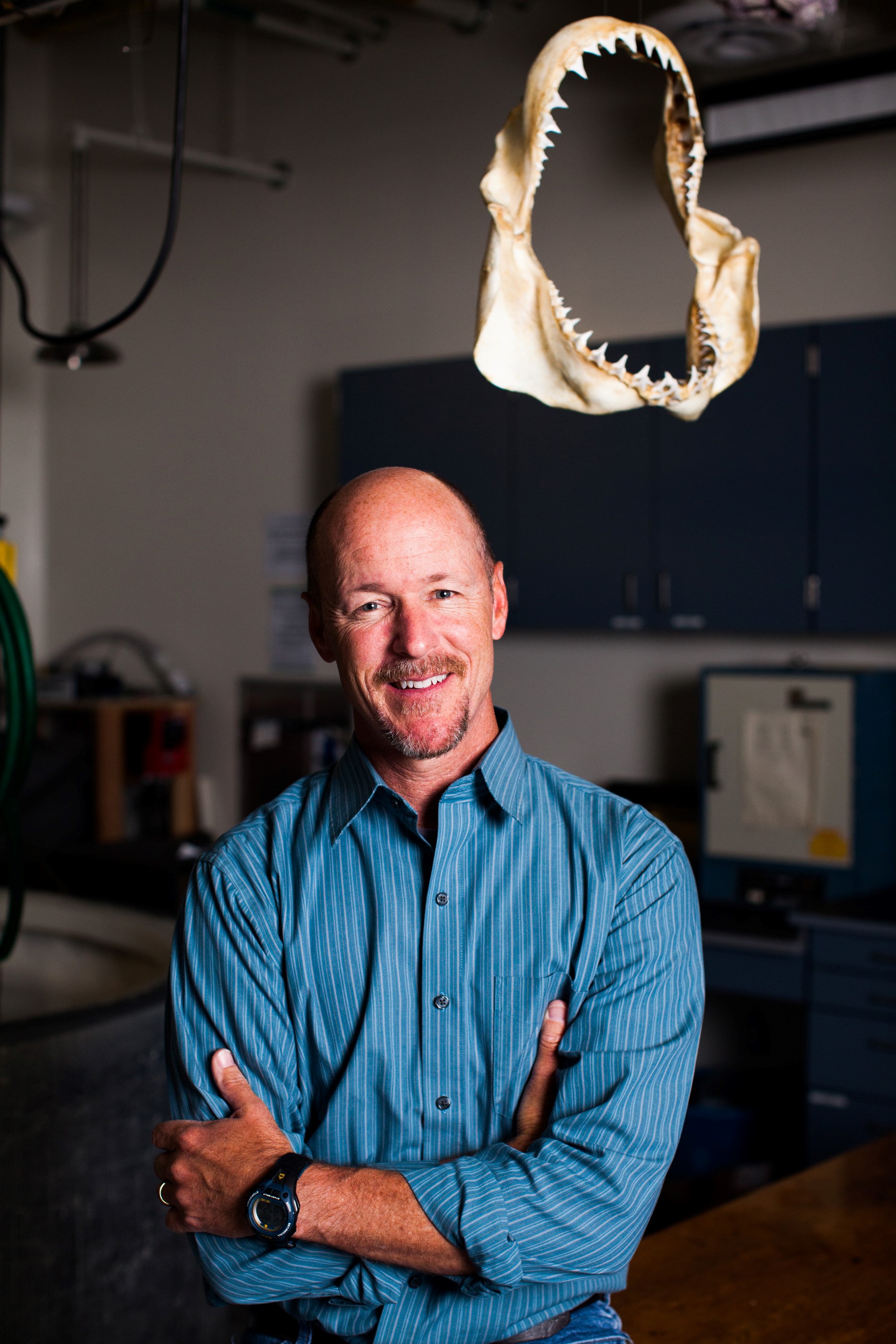
Pictured: Dr. Chris Lowe, professor of marine biology and director of CSULB's Shark Lab. Photo credit: Cal State Long Beach Shark Lab

Pictured: Dr. Chris Lowe, professor of marine biology and director of CSULB’s Shark Lab.

“The sharks in Guadalupe, the sharks in the Farallon Islands and the sharks found along Southern California, at least the ones sampled so far, all show genetic relatedness,” said Dr. Lowe. “Even though adults may go to different feeding aggregation sites, genetically, they’re all quite similar, which means they’re interbreeding. The part we are interested in is whether that population is increasing, stabilizing or decreasing and that gets tricky to determine.”

Let’s rewind to 1994:

Aside from this year supporting a decade of flannel shirts, publicizing the O.J. Simpson murder trials and debuting many many saccharine Disney movies and teen-angsty sitcoms, this was also the year California voters ushered in  Proposition 132, which banned the use of nearshore gill and trammel nets. Primarily used to catch white sea bass, halibut and soup fin sharks, these fishing methods incidentally also caught marine mammals such as sea lions, dolphins and whales.

“Because that fishery had such bad by-catch of marine mammals and birds, it was brought to the voters,” said Dr. Lowe. “Since the banning of that practice, pretty much all of those species have come back, including white sea bass, which was a target in that fishery.”

The prop established a Marine Protected Zone within three miles of coastal Southern California and directed California Fish and Game to establish four new ocean water ecological reserves for marine research, among other items. Coincidentally, after 50 years of baby white sharks being caught and landed in these same nets, not only did Prop 132 come into effect, but also in that same year, great white sharks became protected by the state of California.

“The recovery of sharks and other predators was a collective effort, it wasn’t just protection,” said Dr. Lowe. “The other key part of the white shark’s success is that adult white shark’s primary food source, marine mammals, were also simultaneously recovering.”

Pictured is a juvenile great white shark off of Manhattan Beach. Photo credit: Cal State Long Beach Shark lab

Pictured is a juvenile great white shark off of Manhattan Beach.

However, per Dr. Lowe, these populations have taken decades to recover from otherwise complete depletion via over-fishing and inhumane treatment, which dates back to the early 20th century. These animals did not receive fishing protection until 1972’s Marine Mammal Protection Act, which prohibits the “take” or harm of all marine mammals in U.S. waters. In addition, the Magnuson-Stevens Act, passed in 1976, provided further reform and regulation over the fishing industry. This act fostered long-term biological as well as economic sustainability of U.S. fisheries out to 200 nautical miles offshore–this act also supports fisheries as long as sustainable and biologically-friendly practices are utilized while rebuilding and contributing to back to marine environment.

“As a result, you see a big uptick in pretty much all marine mammals because two things were happening: Our commercial fisheries were going away because fishers could no longer afford to catch fish due to increased regulations and increased fuel costs and these marine mammal populations were really starting to take hold throughout the mid-90’s,” said Dr. Lowe.

Also hailing from the decade of disco were the Clean Water Act of 1972, which gave the Environmental Protection Agency (EPA) authority to implement wastewater standards and regulate pollutant discharge in the U.S., and the Clean Air Act of 1970, which was designed to control air pollution on a national level. The Clean Air Act was the first and is also considered to be one of the most influential and comprehensive air quality laws in the world.

“As I started to work my way down the food chain, I realized that despite all of the bad news the public is getting, there are actually some good signs,” said Dr. Lowe. “Many of these species of fish that marine mammals eat are greatly affected by water quality. When I started researching, even our water quality has gotten better over the last years. Additionally, in Southern California, we had some of the worst air quality that existed anywhere in the country. And now our air is cleaner with five times more people and 28 times more cars than it was 10 years ago.”

Despite the unfortunate attack, the fearful rumors and inquiring minds (like yours truly), after decades of regulation and concerted conservation efforts from passionate scientists, organizations and volunteers, great whites are bringing hope to marine biologists and conservationists.
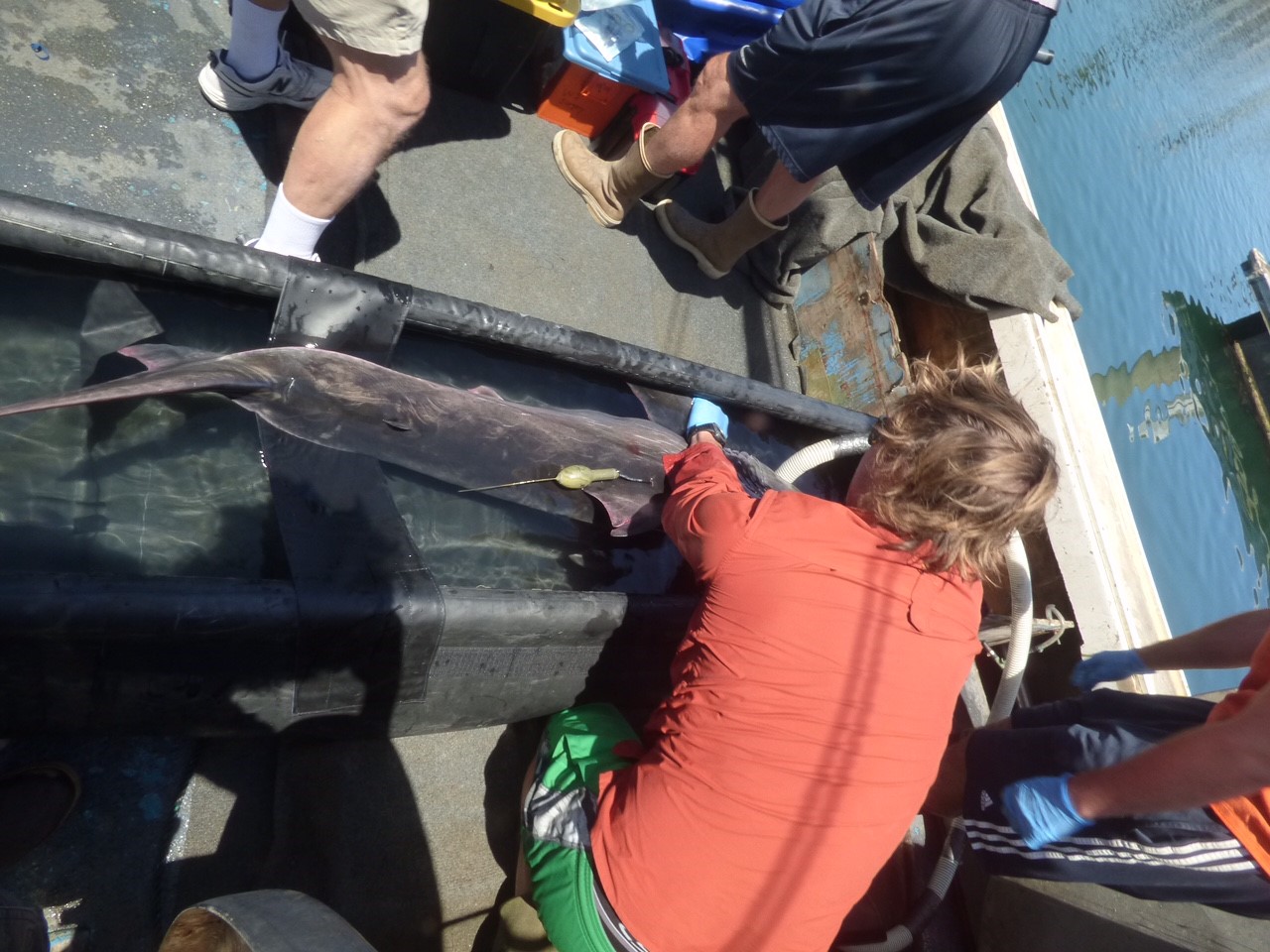
Shark Lab grad student Connor White attaches a PAT tag to a juvenile white shark off of the Ventura coast. Photo credit: Cal State University-Long Beach's Shark Lab

Shark Lab grad student Connor White attaches a PAT tag to a juvenile white shark off of the Ventura coast.

“As I started to look at all of these things, I recognized that some things are getting better,” said Dr. Lowe. “Protection and conservation are actually working, it’s just taking decades to see the affects.”

As we remain vigilant during our surf sessions and interactions with the ocean, it is important to consider and respect who’s home we are entering. Although it’s impossible to predict an attack, pay close attention to basic signs of when to stay out of the water. The Discovery Channel’s 20 Ways to Avoid a Shark Attack is a pretty comprehensive list–it’s also important to listen to your gut.

The same day of the San Onofre attack, I happen to be in San Clemente and, of course, had a surf itch, but no board. After attempting to borrow one from a friend, I resolved to take my time and drive by the San Clemente Pier to check the waves.

I saw the brown murky water with a few crumblers rolling through–Man, it looks sharky, I thought, and decided against meeting my friend at SanO.

Somewhere around the same time this thought ran through my mind, the attack occurred at Church.

Sometimes it’s hard to define “sharky” waters or what your gut tells you, but as the old adage goes: when in doubt, don’t go out.

At the same token, it’s important to not let fear rule your surf sessions. According to The Fisheries Blog’s 10 Things More Likely than a Shark Attack, you have a greater chance of being hit by a comet or, my personal fave, are more likely to be injured by a toilet.

Stick that in your silver screen pipe and smoke it, Hollywood! Ahh, killer toilets!!

Sharks are incredibly necessary to our marine ecosystems and research indicates their presence is, to quote Martha Stewart: “a good thing.” According to Smithsonian Magazine’s What Happens When Predators Disappear, when an apex predator is removed from the food chain, their prey remains unchecked, which can not only cause an increase to the prey population, but it can also have devastating affects on plant life and the surrounding environment, including increases in bacteria and infectious diseases.
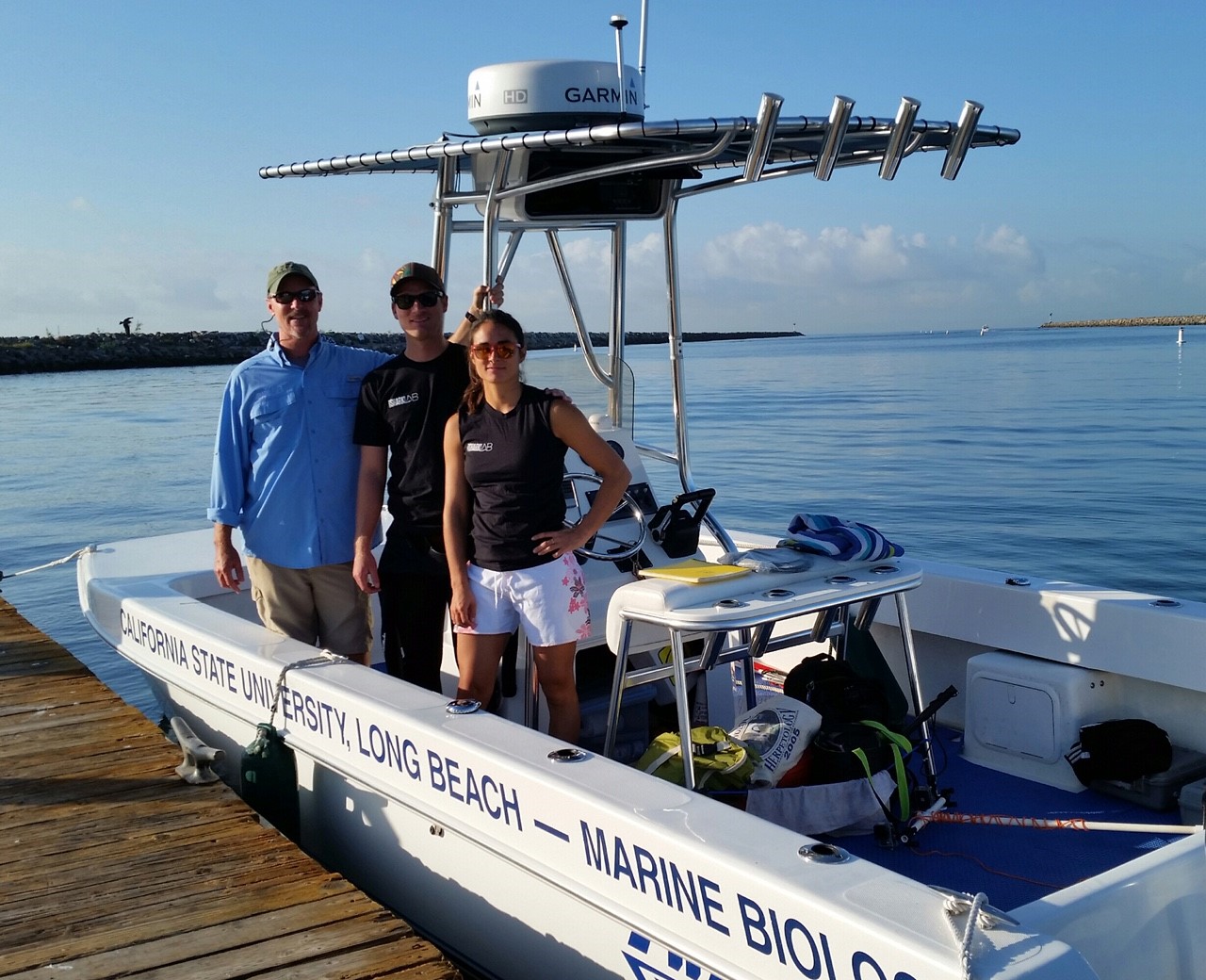
Two Shark Lab grad students prepare for an expedition with Dr. Chris Lowe.

Two Shark Lab grad students prepare for an expedition with Dr. Chris Lowe.

“The ‘canary in the coal mine’ for all of this, believe it or not, are the predators,” said Dr. Lowe. “When things at the top of the food chain, like white sharks and sea lions, start to come back, that means the rest of the ecosystem is showing signs of recovery because predators are the most sensitive.”

For more information about California State University’s Shark Lab and its research, click here.

Support marine and wildlife in your local area! Volunteer for coastal cleanups and marine protection observation.
 

Five Things Happening in the Surf World that are NOT the U.S. Open of Surfing

As summer begins to wrap up, it’s that time of year where  the “circus” comes to town to dominate our news feed about all things surf/skate/BMX/party culture related at the 2017 Vans U.S. Open of Surfing.

But this isn’t about that.

Nope.

In case you haven’t noticed, there are other noteworthy happenings circulating the internet in conjunction with the insanely skillful action sports event and it’s games, clothing and salacious body art.

Google fingers, start your engines!

WSL’s New Exec

The World Surf League (WSL) has named Sophie Goldschmidt as their new Chief Executive Officer. According to Surfline.com, Ms. Goldschmidt comes from a mainstream sports background. From the WSL press release:

Goldschmidt joins the WSL from CSM Sport and Entertainment, where she served as Group Managing Director and was responsible for developing and driving new business initiatives and commercial growth across the company’s global operations, in addition to managing the group’s brand development and marketing. Passionate about surfing, she has strong relationships and international experience working across global markets in both sports management and marketing and communications having held executive roles in the Rugby Football Union, National Basketball Association (NBA), Women’s Tennis Association (WTA), and Adidas. 

“It is an honor to lead the WSL,” she said. “The League has experienced tremendous growth in recent years and has pioneered incredible innovations to transform surfing into a remarkable, digital-first and world-class sport that naturally also transcends into the lifestyle sector so well.” 

With this role, she becomes one of the few female executives to lead a global sports league for both male and female professional athletes. 

Yay, girl power!!

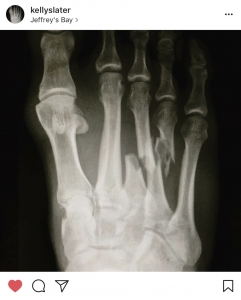
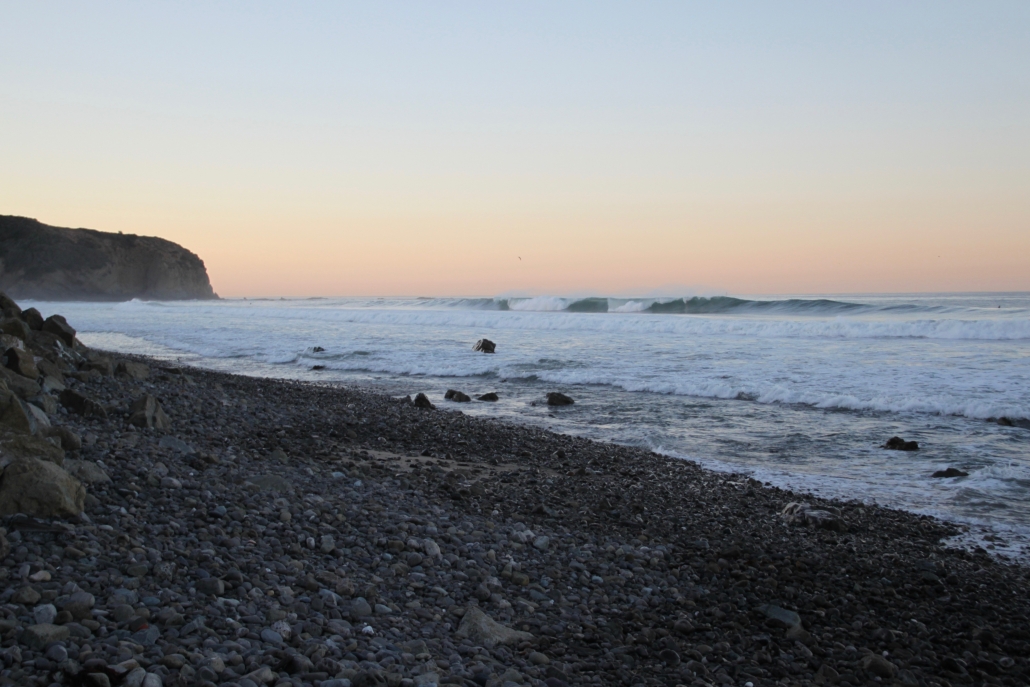
Kelly Slater shattered some little piggies at J-Bay!

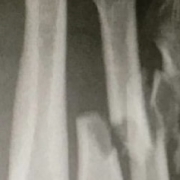
By “little piggies,” I don’t mean his competition. According to The Guardian and Mr. Slater’s Insta post, the 11-time world champ broke two metatarsal bones and expects to be out of commission for the next six weeks. Time re-organize your Fantasy Surf League!

Kelly’s Insta post:

“You ever folded your entire foot backwards? If  you try it sometime, this is what it might look like. I pulled into a barrel this morning and the whitewash bounced the board back into my foot as I hit the closeout, taking all the pressure into the metatarsals…kinda like smashing my foot with a big hammer as hard as I can…”

OUCH.

SHARK(SSSSS)!

Historical fishing data shows that there are, at least, four juvenile white shark hot spots in Southern California. These areas are: Ventura/Oxnard, Santa Monica Bay, Huntington Beach and the stretch of coast between Dana Point and San Onofre.

They’re after those dem longerboarders, right?! ;)

Nah, according to KQED News, these juvis are attracted to the warmer coastal waters since, unlike their older (and bigger) relatives, they can’t handle the cold water temps. Additionally, they don’t have to worry about predators, like Orcas and bigger sharks, AND! There is an abundant food supply:

stingrays = potato chips

Which leads me to a bigger conclusion: I was a baby great white in a previous life.

Tropical Cyclone Party!

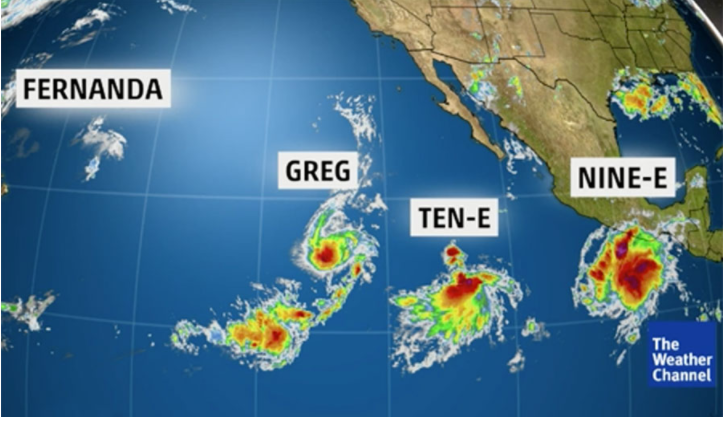
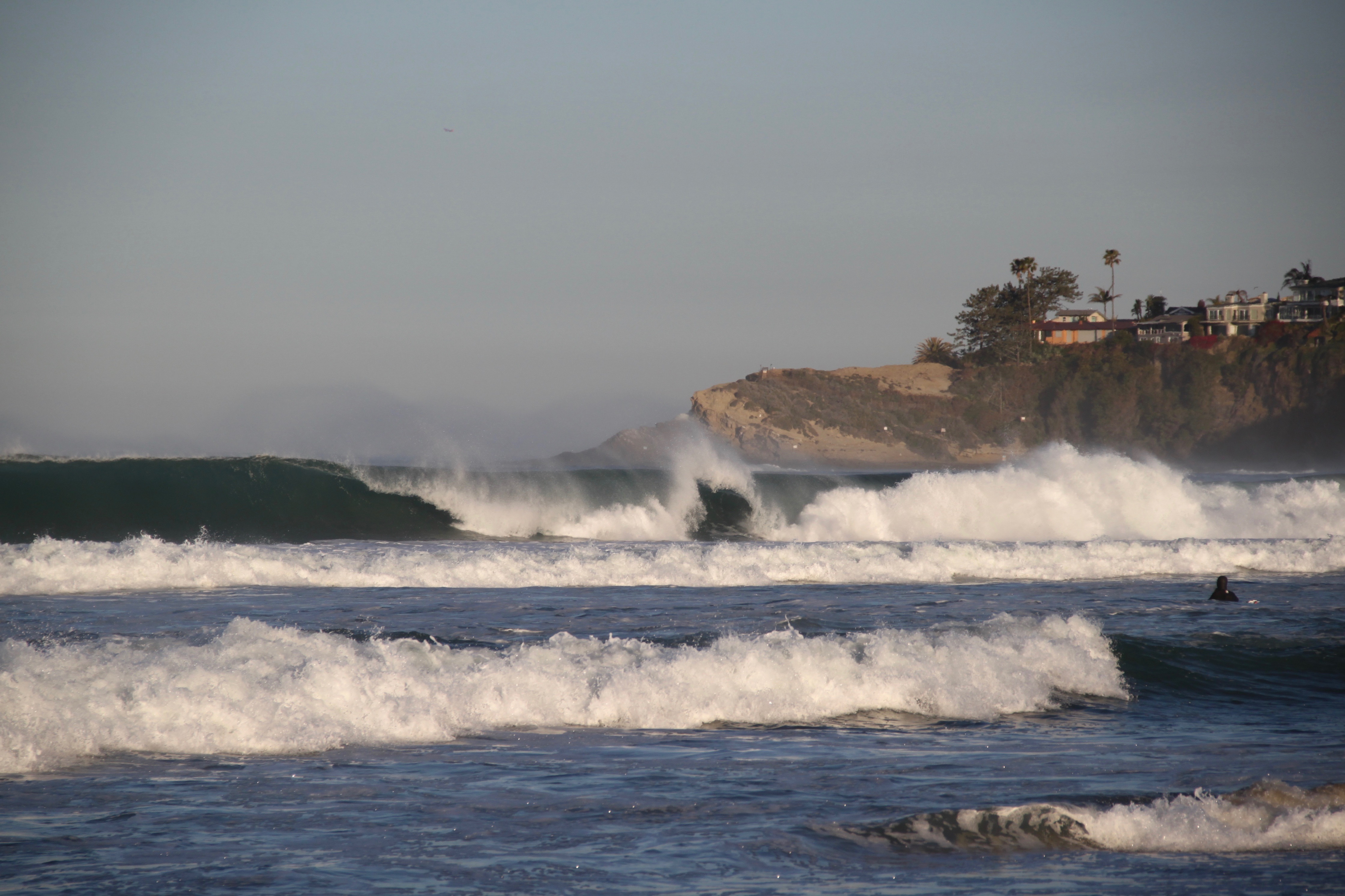
The North Pacific had a party last weekend and in case you were unable to attend and also suffer from serious FOMO, don’t worry. I was probably further inland than you (try: Austin, TX) and it looks like we missed nothing. In fact, I’m pretty sure I had a better opportunity to surf Austin’s wave pool, a.k.a.: NLand Park, but alas, I opted for a Sunday dive into Barton Springs.

The cool part about this little bit of news is that eight cyclones forming and cruising around all at once is quite the rare event–especially since, according to The Weather Channel’s Jon Erdman:

“On average, 36 tropical cyclones form each year in the northwestern Pacific and southwestern Pacific basins, combined,” wrote Jon Erdman for the Weather Channel. “Another 16-17 form each year in the central and eastern north Pacific basin.”

That’s a good chunk of our season already passing us by. So, what’s up with that? Watch TWC for a detailed explanation.
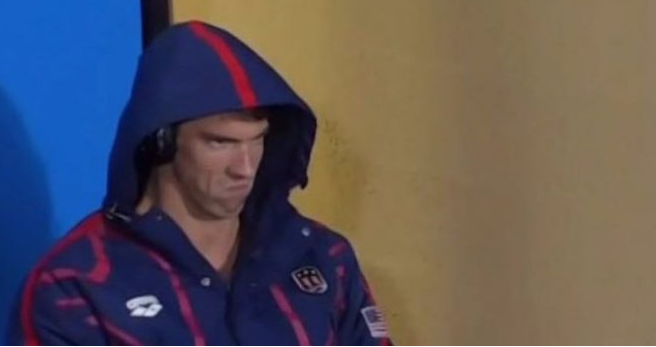
More Click Bait: Michael Phelps vs. Great White Shark

Per The Inertia’s recent coverage on this interesting staged competition, Phelps raced the CGI Great White and lost. Viewers are pissed. The 100 meter race between Phelps and the ocean’s top predator came down to Phelps shy of two seconds, his sleekly designed wetsuit equipped with a monofin getup no match for nature’s 15 million years of apex predatory evolution.
Update: My MIA Theory

For a while now, I have been pretty MIA on my blog. It hasn’t been easy, since I have at least five blogs in progress (Anyone want to be my model for art??) and have yet to hit the publish button, while more ideas continue to chew at my noggin. However, essentially, I had to hit “pause” because life tends to happen at any given moment and, as I discovered, sometimes you can’t do it all. There are times where you should sit back, take a breath and just watch the waves.

Essentially, that is what I had to do after my sweet fur baby companion sadly developed an aggressive cancer and I had to say a very painful goodbye to him over a month ago. Three weeks after I lost my sweet cat, I also lost my job during a company-wide layoff.

Case-in-point: Always be prepared for those random rogue sets because they happen.

Emotional rollercoasters are taxing on the soul and not a fun ride, but they are essential for inner growth. Like waves have peaks and troughs, life has ups and downs. Through pain and loss, we can discover more about our strengths and opportunities for growth.

It seems there is no rhyme or reason for life’s ebbs and flows, but it is important to take charge and stay the course–to never give up on goals. Whether it’s popping up on your board or perfecting a proper roundhouse, it is always doable, no matter the board, age or skill set. The great thing about a hobby like surfing is it is a ‘forever challenge,’ which creates tenacity.

I like to think surfing plays a big role in training me for life’s victories and disappointments.

Like getting caught inside or surfing an aggressive crowd, life’s frustrations tend to appear more than the benefits. But scoring that perfect ride keeps us frothing, coming back for more, despite those closeout sets. Focus on that ride, keep paddling out, no matter how many waves crash in your face.

Schwack Attack

When surfing frustrates me, I focus on one of my most cherished memories: The first time I caught a wave and the smile it brought to my face.

After this past month of ebbs, I am focusing on paddling towards the peak because I deserve my dreams and so does everyone who sets their course for the horizon. My grandma used to say: “Hitch your wagon to a star.”

Case-in-point: Never give up

Join the Battle with Mauli Ola Foundation and Vote in This Year’s Battle for the Breasts

It’s that time of year where ‘voting’ is synonymous with our everyday vocab and is also the theme of every mainstream news media outlet across America. All monkey suits, hair barrels, deleted emails and unpaid taxes aside–this particular contest is way more fun.

I mean WAY more fun and goes towards an amazing cause.

14566342_1289946491030203_7155400683317576478_o

All Photo Courtesies: Mauli Ola Foundation

In case you haven’t noticed, things went a little ‘pink’ on Surfline’s site October 4th. That’s because…

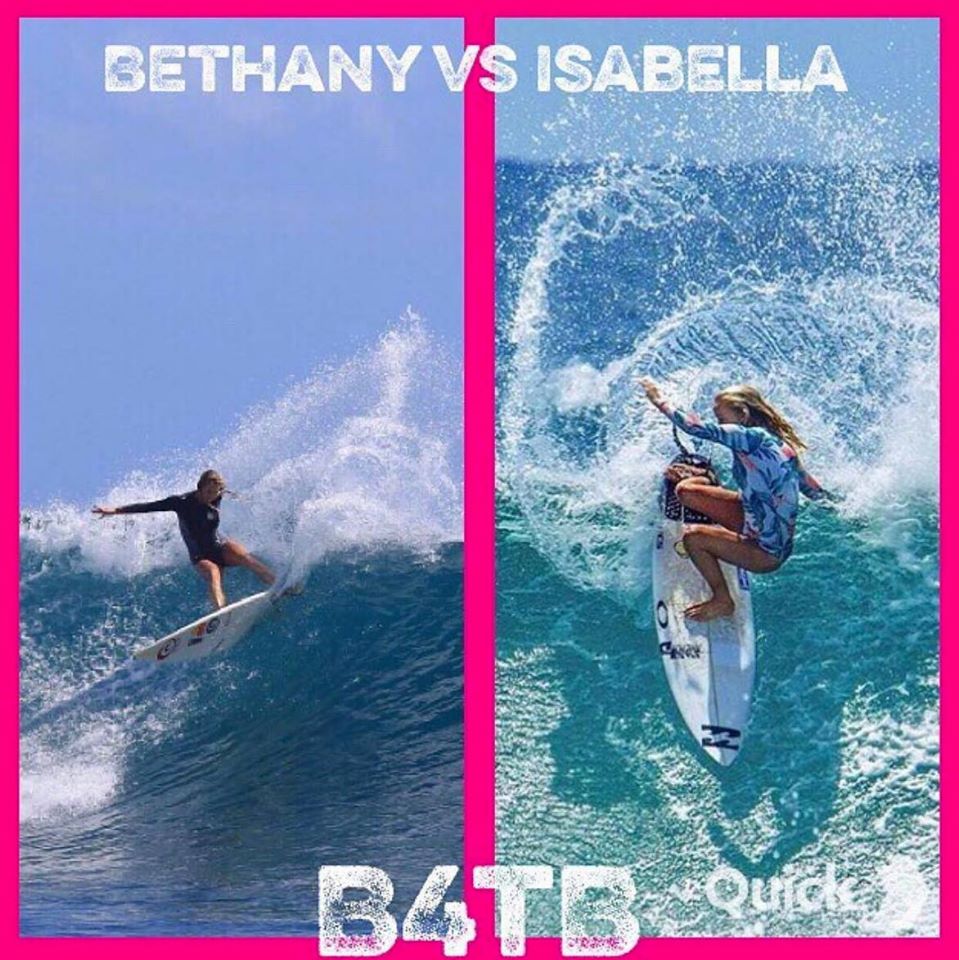
–>October is Breast Cancer Awareness Month and in honor of this month, the Mauli Ola Foundation is featuring their third annual Battle for the Breasts (#B4TB) online surf video contest on Surfline’s potent platform.

Sixteen professional women surfers are paired with 16 cancer clinics and/or foundations. Each surfer will submit their top video clips to Surfline every Tuesday morning in October for a chance to win their clinic/foundation up to $125,000 in hereditary breast cancer testing vouchers, which are donated by Ambry Genetics.

FACT: According to the American Cancer Society, it is estimated that 246,660 new cases of invasive breast cancer will be diagnosed in women this year and out of this number, about 5-10% of cases will be caused by inherited genes.

Inherited whaaaksdhajkj–you say? Genes are those little letters in our DNA that determine stuff like your eye color, height and other things like that. Genes are passed on from your parents and can sometimes contain a mutation, which can be the cause of good and bad things that might occur in your bod. The genetic testing vouchers can provide women with early detection of breast cancer so that early treatment can possibly help prevent breast cancer’s progression.

So, now that I’ve ‘splained it all, there’s only one thing left to do–watch these incredible women rip apart your dream waves and vote for your favorite clip:


Confess: How Does the Ocean Make You Feel?

Sometimes no words can describe how it feels to be in, near or on the ocean. There are times where one simple word pinpoints it all. Conversely, the ocean experience has produced many essays, books, poems, songs, art and even scientific studies. Like individual personalities, our ocean experiences are often unique and special.
In one word, I found out what the ocean means to some of my agua-junkie pals.
Mahalos to my friends who shared their photos and words!
"Wet."-Rob Grasska
"Wet."-Rob Grasska
"Wet."-Rob Grasska
"Alive." -Bekah Baylock
"Alive."-Bekah Baylock
"Tranquilo."-Josh Baylock
"Home." -Devyn Hartnett
"Home."-Devyn Hartnett
"Present."-Jen Castelo
"Life."-Lucho Soto
"Life."-Lucho Soto
"Life."-Lucho Soto
[dt_fancy_title title=”Confess:” title_size=”h3″ title_color=”title” separator_style=”dashed” separator_color=”custom” custom_separator_color=”#00dfef”]

How does the Ocean make you feel? Share your photo and include the hashtag:
#TheOceanMakesUsFeel

Calavera Swimwear: Keeping Your Eyes on the Waves


IMG_8264We all love a good show, but when it comes to surfing, the only thing that should be center stage are the waves, right? As a woman who is consistently in the agua, finding the perfect bikini that is both stylish and functional has often been a challenge and has made me one helluva bikini connoisseur–a picky one, I might add.

Enter Calavera Swimwear.

Gents, it’s time to forget about our lovely Ms. Blanchard’s  notorious bottom turns for a second and consider what a woman really wants out there in the deep blue. At the end of the day, girls just wanna have fun, and, let’s be honest, for the everyday surfer girl, we want to look good and nail solid backside hacks without the full moon view or surface from a luscious duck dive or turtle roll with all of our goods intact.

Or we just plain want to be in, on or near the water with no worries. Period.

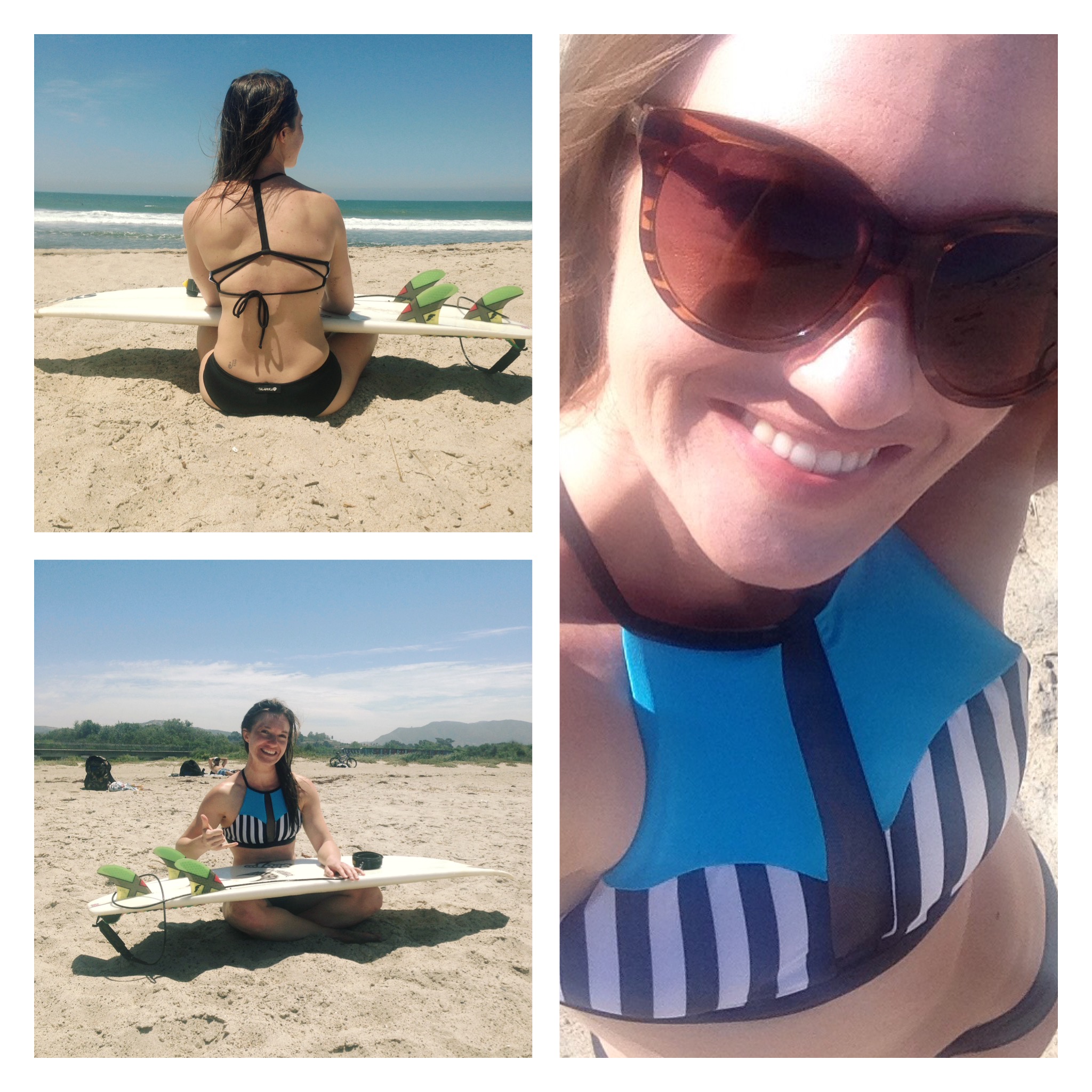
Calavera swimsuits does just that: both stylish and very functional suits designed and manufactured in Los Angeles, CA, this suit stays put on the bod and has become a staple ‘kini in my surf gear.

DSCN3362 (2)“We test our suits in Playa Hermosa, Costa Rica, one of the toughest waves in the world, with the idea that if they hold up in those conditions, the suits will hold up for anything,” said Calavera Swimwear Founder Anna Jerstrom.

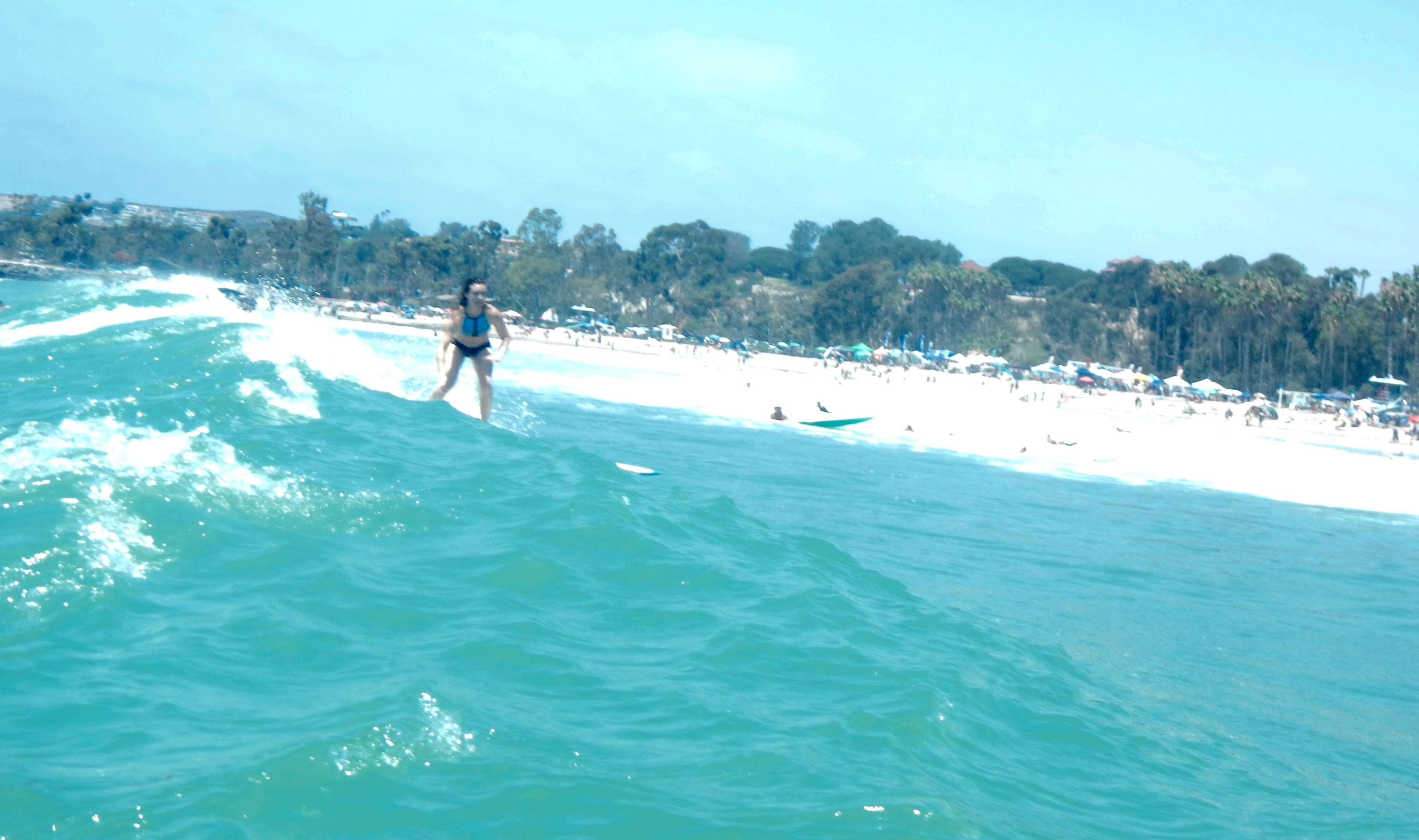
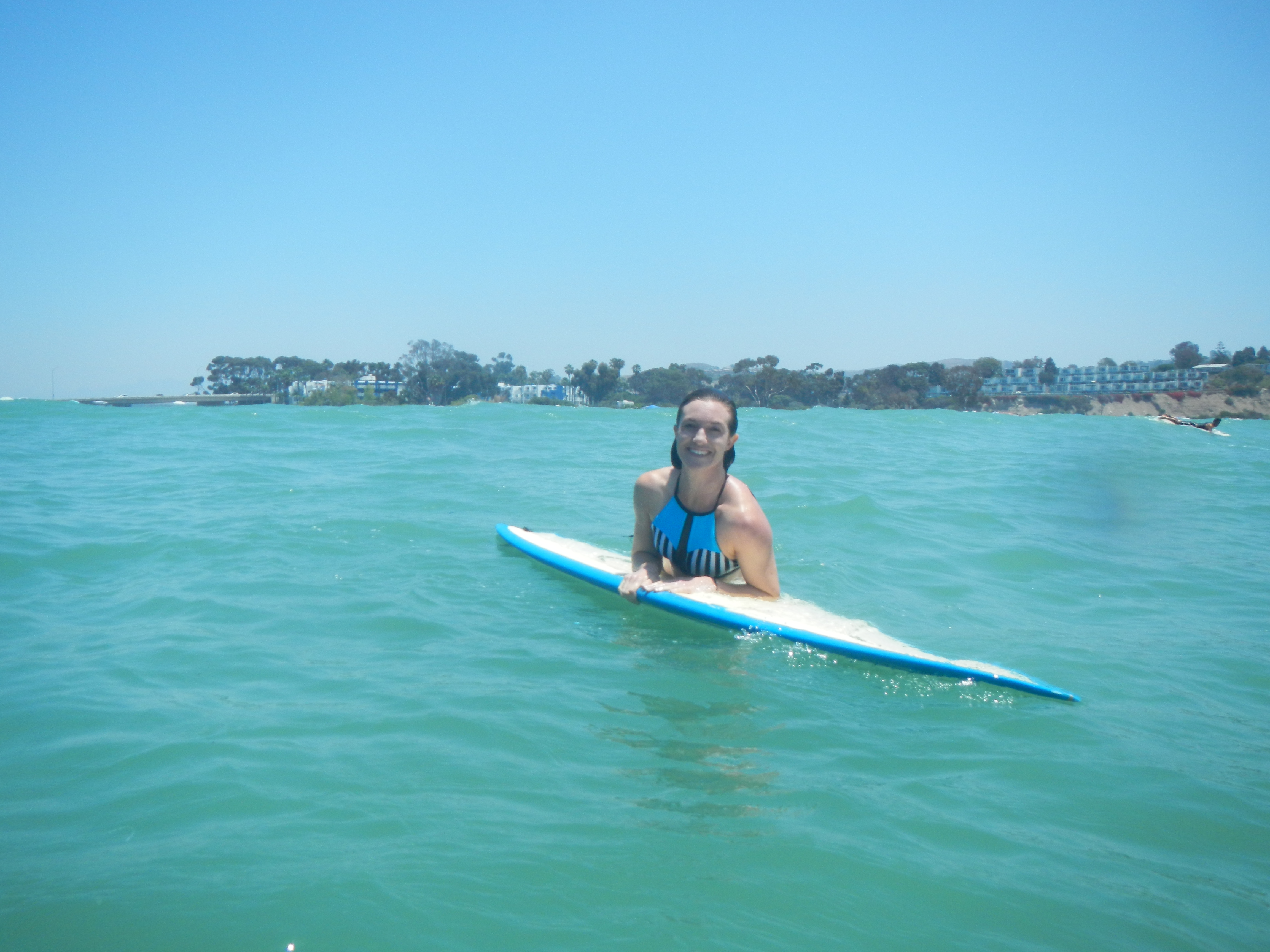
I decided to put the Reversible Halter Top Stripe and the Core Hipster Bottoms to the California test a-la point and beach breaks. This suit saw San Clemente State Park’s hollow waves, Salt Creek’s insiders and overhead Trestles, and (on the gentler side of things), Doheny’s soft right handers. It did not budge from my bod–not to mention I felt like the female version of James Bond in the water. The top is specifically designed to avoid strain around the neck, which makes it very comfortable for hours of activity.


Instead of elastic bands around the edging, Calavera features ties that don’t wear out as fast as your standard bikini. You can also can tie them yourself and adjust the “hold” for your bottoms. I love this feature because all too often, elastic quickly becomes shot in the sun and salt water, which ultimately retires the bikini.

In addition to awesome designs, color palettes and solid functionality, Calavera ships their bikinis to you sans plastic wrapping! Environmentally conscious efforts, especially plastic reduction, are a major bonus that I look for in companies these days.

Calavera has passed my bikini test with flying colors. No matter the duck dive, wipeout or turn, everything stays on AND in comfortably throughout my ocean activities. And I feel great in my suit!!

To all of your surfer girls and athletes out there: I challenge you to give their ‘kinis a shot at your homebreak.

Whether your rip, glide or flounder, this bikini will stay on you. The only show the boys should be watching is that last hack you just pulled in the critical section, right? ;)

DSCN3364


Strike a Pose: 6 Yoga Postures that Improve your Surfing

Whether you shred the gnar or gracefully glide across the face of a wave, it is common knowledge the best exercise for surfing is, well, surfing! However, out of the million billion workout trends found beneficial as a cross-training source, yoga often pops up onto almost every surfer’s radar one way or another. If you treat it like a workout (see “hot yoga sculpt”) or as a way to decompress, a yoga practice has something for everyone.

“For surfers, the focus is a lot of heart opening, arm and back strengthening postures,” said Tiffany Martin, Warrior One Wellness Owner and Yoga Instructor. “Surfers are often already in that halfway lift point, so in postures like Up-Dog or Baby Cobra, your legs and toes are still active, which are really important for balance, strengthening and back support.”

Legendary pro surfers like Gerry Lopez and Greg Long have long-since cultivated disciplined practices and, as a result, have improved their surfing and breathing techniques, according to a Surfer Magazine article “How To Save Your Surfing with Yoga.” In some instances, such as Long’s Cortes Bank wipe out, learning to calm the mind and holding breath under extreme duress are a few factors that can play lifesaving roles.

There are hundreds of yoga poses that can benefit your surfing. Customize at will!

Here are 6 yoga poses to get you started, courtesy of Tiffany Martin:

[dt_fancy_separator separator_style=”dotted” separator_color=”accent”]

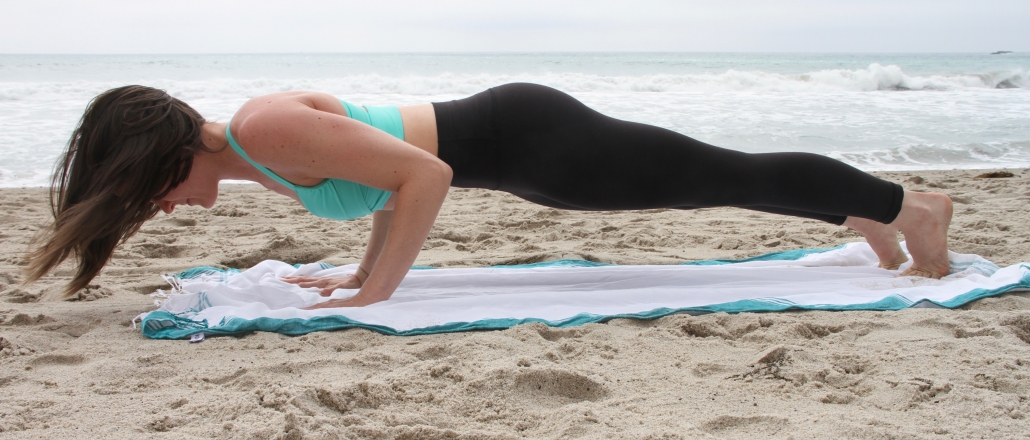
1.) Chaturanga danda, a.k.a.: Low Plank

How: Bend your upper and lower arms 90 degrees at the elbows. Shoulders should not drop lower than the height of your elbows. Hold this pose for 30 seconds or more!

Benefits:

  • Strengthens arms and wrists
  • Tones abdominal muscles
  • Strengthens quads

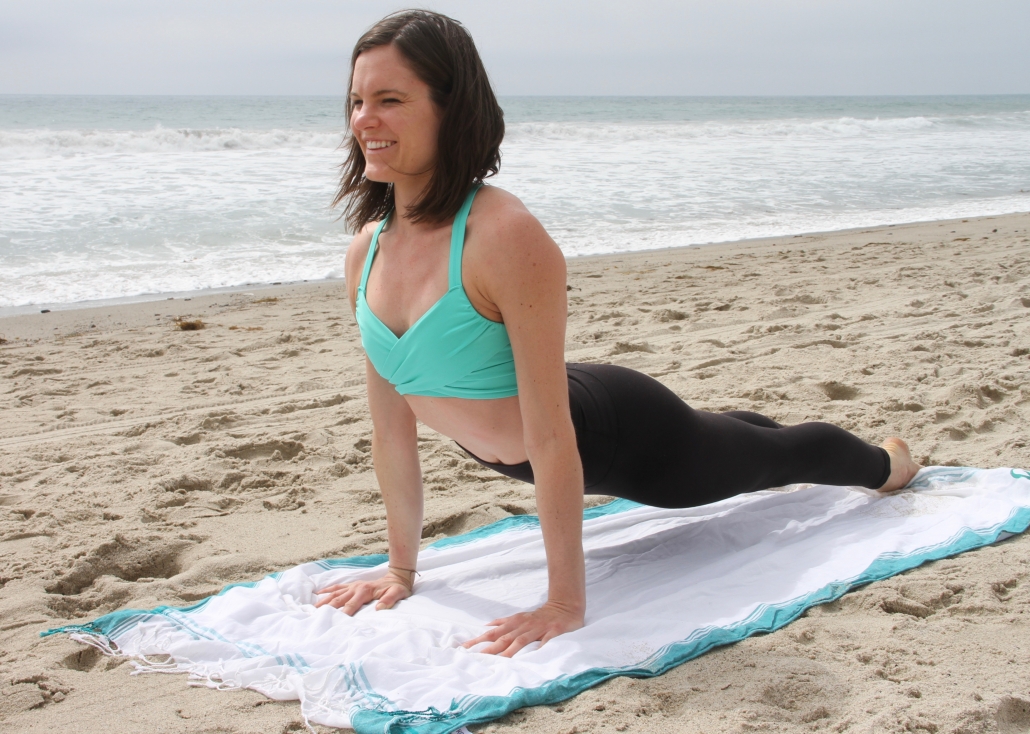
2.) Urdhva mukha svana, a.k.a.: Upward Facing Dog

How: Start by lying face down on the floor with legs extended behind you, toes a few inches apart. Place hands next to your lower ribs. Inhale and press your hands into the floor, pushing your body upward. Firmly press down through the tops of your feet.

Benefits:

  • Strengthens the spine, arms and wrists
  • Stretches chest, shoulders and abdomen
  • Improves posture

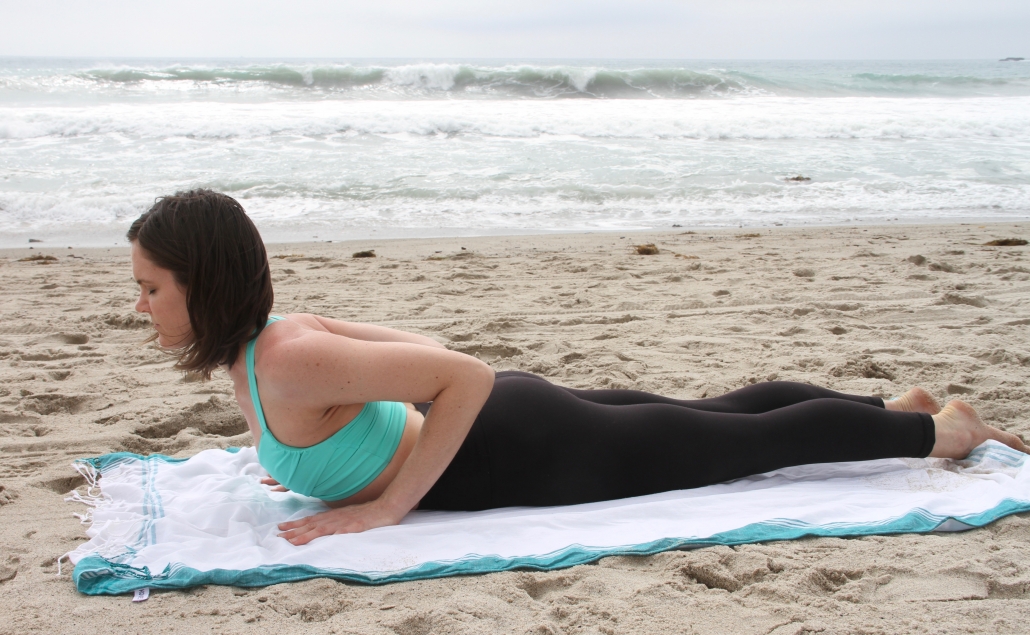
3.) Bhujangasana, a.k.a.: Baby Cobra

How: Begin by lying on your belly, inhale and place elbows under your shoulders, forearms on the floor. Make sure your thighs are firm and point your toes behind you. Breath deep and feel the bend.

Benefits:

  • Stretches shoulder, chest and abdominal muscles
  • Decreases stiffness in the lower back
  • Strengthens arms and shoulders
  • Strengthens the spine
  • Elevates mood
  • Improves circulation of blood and oxygen

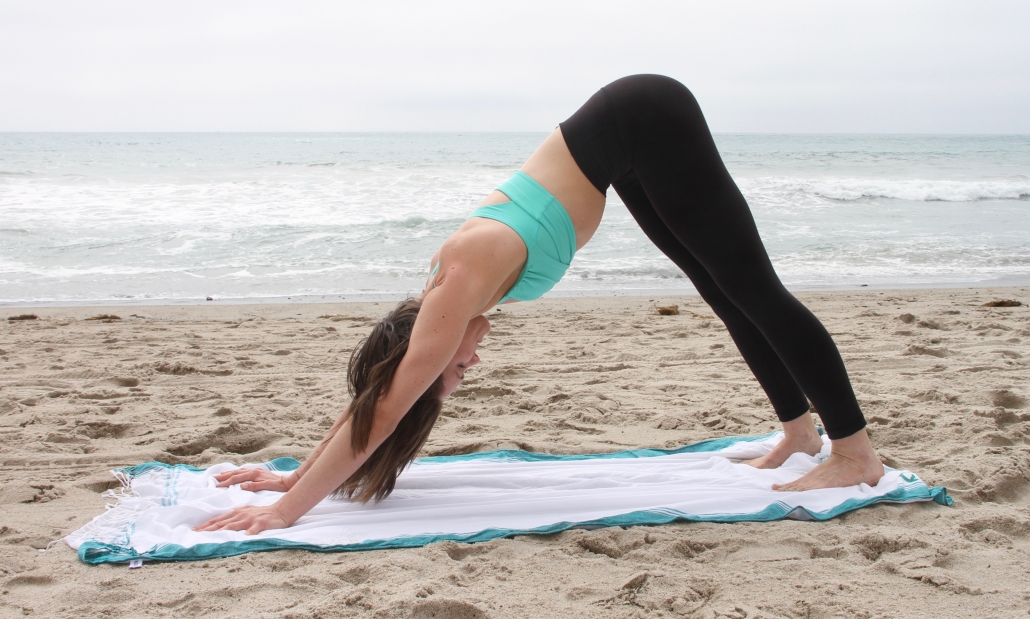
4.) Adho Mukha Svanasana, a.k.a.: Downward Facing Dog

How: Bend your knees, come to the balls of your feet. Bring your shins parallel to the mat and lift your sit bones high and back. Press hips towards the wall behind you and begin to straighten your legs. Remember to keep your head out of your shoulders and allow your shoulder blades to slide down your back.

Benefits:

  • Strengthens arms and legs
  • Stretches shoulders, hamstrings and calves
  • Lengthens spine
  • Energizes the body
  • Calms the brain and helps relieve stress

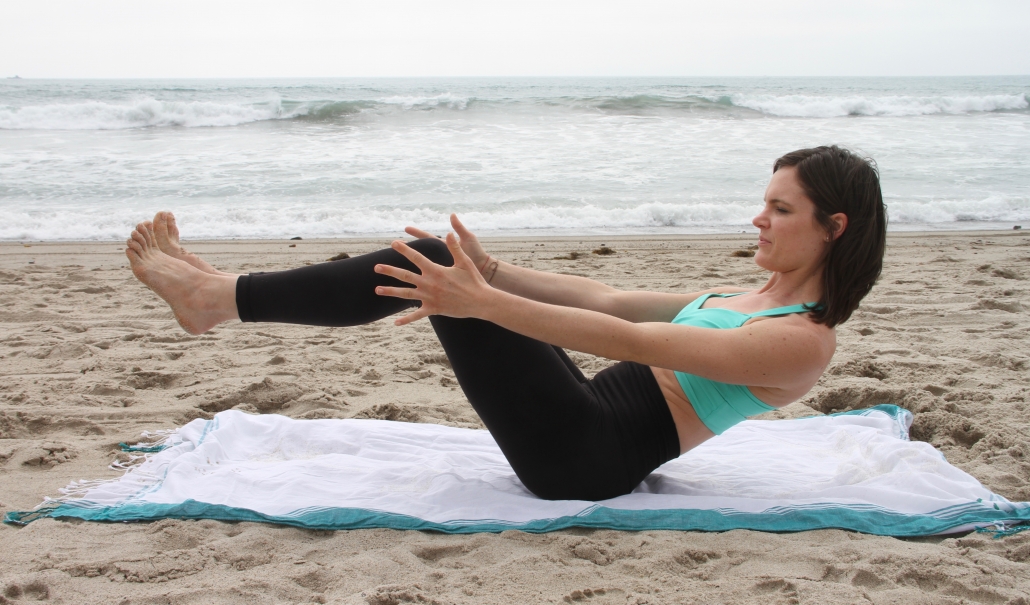
5.) Paripurna Navasana, a.k.a.: Boat Pose

How: Sit on the floor with straight legs in front of you. Exhale slowly and lean back on your sit bones lifting your legs with knees bent off our the floor. Your thighs should be angled at 45 degrees. Hands can be held out in front of you or to the side. Remember to breath.

Benefits:

  • Strengthens abdominal muscles, hip flexors and spine
  • Stimulates kidneys and thyroid
  • Improves digestion

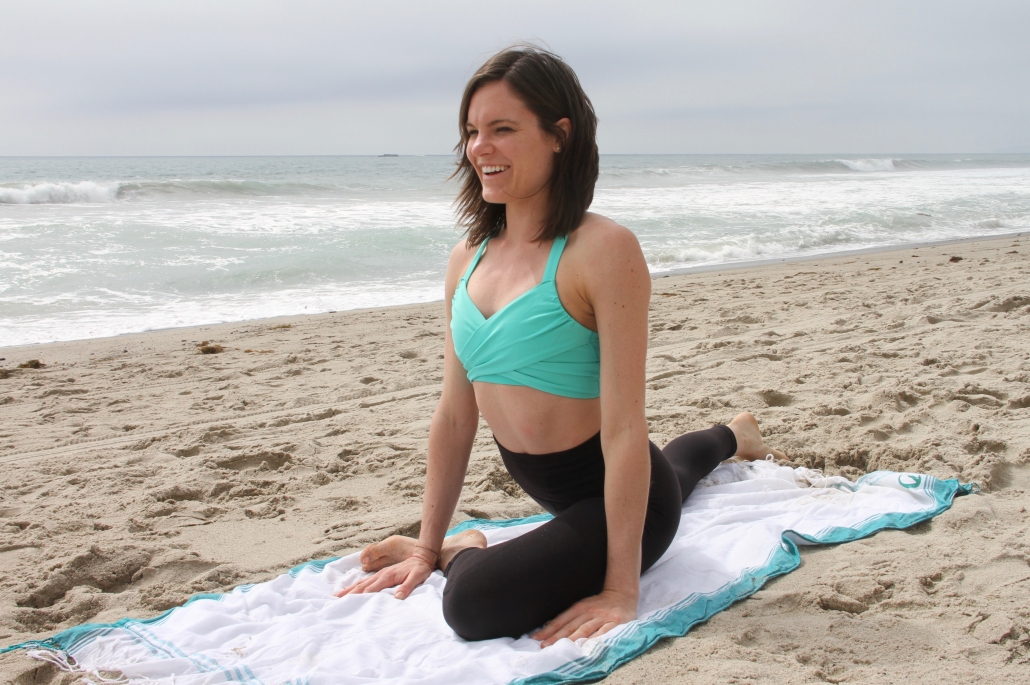
6.) Eka Pada Rajakapotasana , a.k.a.: Pigeon Pose

How: This pose is ideal to implement while you are in Down Dog.

From Down Dog, bring your right shin forward and down so that your right foot is in front of your left hip and your right shin is nearly parallel to the front edge of your mat. Flex your right foot. Stretch your left thigh back as you draw your left hip forward.

Lengthen your belly as you fold over your right leg. If your right hip does not easily reach the floor, place a folded blanket or block under your right sitting bone. Breathe deep and repeat on the other side.

“Hip-opening can help release the low back and the legs,” said Martin. “You can only get so open in the upper body if your hips are super tight, so that’s a needed balance for practice.”

Benefits:

  • Strengthens abdominal muscles, hip flexors and spine
  • Stimulates kidneys and thyroid
  • Improves digestion
[dt_fancy_separator separator_style=”dashed” separator_color=”accent”]

Yoga has become a popular pastime for many people across the nation and world. Check your local listings for classes in your area. Free classes are also available–a simple donation is usually requested at the end of class.

“I started a beach yoga class at Doheny state beach in Dana Point,” said Martin. “Come join me! It’s every Monday, Wednesday and Friday at 8:15 a.m. and I also teach privately at my house studio.”

In addition to teaching at several local studios, Martin also developed Warrior One Wellness, a fitness company, where she hosts yoga sessions for different treatment centers, corporations, events and parties.

Click here for more information about Warrior One Wellness!

Yoga offers many health benefits for not only surfers, but also dancers, athletes and the mass populous in general. According to The Yoga Health Foundation, yoga can reduce cortisol levels, which contribute to stress and weight gain. Even a small amount of daily stretching can improve flexibility and blood flow, as well as decrease the potential for injury, said the Mayo Clinic.

Keep an open mind, remember to breathe through the hard parts and watch your physical and mental well-being transform over time.

Mauli Ola Foundation and friends hold ‘Surf Experience Day’ at Torquay Beach

Mauli Ola Beach Experience Day from STAB on Vimeo.

This incredible nonprofit organization is dedicated to providing hope to individuals living with genetic disease by introducing the ocean’s healing properties as a natural therapy through surfing and other ocean-related activities.

“What makes MOF so amazing is that it not only grants an opportunity for kids to get active, have fun, and build their confidence, but it also introduces the ocean as a natural form of therapy,” said Ambry Genetics Pediatric Product Manager and Mauli Ola contributor Christy Moore. “Hypertonic saline is a treatment for people with Cystic Fibrosis, and the best source for it, for people who are healthy enough, is the ocean!  Sometimes kids can even skip a treatment that day after being in the ocean.”

For more information about MOF and how to get involved, visit: mauliola.org


Patrolling the Dawn, Vol. 2

February 25, 2016 // Dana Point, California //

Off-shore winds lightly rattled my windows while crawling out of bed and rubbing my puffy eyes to the sound of a 5:30 a.m. alarm. My board was already tucked in my car the night before, just needed to throw my wetsuit in the trunk, in case I decided to actually paddle out into the forecasted huge surf. :)

The view from Strand’s parking lot made any question in my mind about paddling out a definitive ‘no.’ Large sets could be seen from the top of the stairs rolling through, lurching and then mercilessly pounding the sandbars.

Later that morning, for the first time in seven years, the 31st Annual Quiksilver Eddie Aikau big wave invitational was held at Waimea Bay on O’ahu’s North Shore.

I CONFESS: I’m so glad I brought my camera.

IMG_3929IMG_3949IMG_3930IMG_3974IMG_3955IMG_3960IMG_3966IMG_3940IMG_3983

How to Surf a Crowded Lineup

1.) Do your Homework

Thought you could escape class for a surf? Hahahahahahaha–No. If you are a newcomer/beginner/slacker, it’s good to study up on the actual break or else allow the locals to school you.

Hellllooo, homework!

And hey, we all learn in different ways! Just be sure to get a good understanding of “when the wave breaks here, don’t be there” concept and try to stay out of the impact zone. Often times perfection and hastiness will get the better of us and we charge out to the peak only to discover a side shore current that conveniently drops us off right where we don’t want to be.
Damn, there goes that Clif Bar.

In case it’s not totally obvious, ask yourself: Is it a point break, beach break or a reef? Where do you want to paddle out? Where is the impact zone? What waves are people avoiding and why? If you can stand it, take some time to chill on the sand and watch a few waves roll through before jumping in. Chances are there is a Surfline cam dedicated to that spot, so you’ve probably already watched it online, anyway.

2.) Patience, Young Skywalker

Patience, Keoni.

Once you paddle out, this is also a great opportunity to sit back, relax and observe the natural flow of the lineup. Try not to be pushy and paddle straight to the peak. Paddling out there like Billy Badass won’t score you waves unless you’re a pro…but most of the time, these guys are humble and kind when they paddle out any way. The peak is not a place for an undeserved sense of entitlement. Stow the ego.

Do not–I repeat–DO NOT snake, back-paddle or drop in on a local. That’s a great way to leave your wave count at 1 and local respect at 0.
No matter how popular or populated, always show respect for the people who have already put in their time at the break. But remember: much like they taught you in preschool, everyone gets a turn and you will get yours.
If you’re constantly getting snaked and this is your fourth or fifth visit to the spot, forget what I just wrote. (see ‘Tales of a Back paddling Player‘)


3.) An Attitude of Gratitude

Yea, you might not get the same amount of waves as you would from your usual spot at first, but showing appreciation towards the locals goes a looooong way

Getting stoked!

Remember how awesome it is to be a surfer! Think about the first time you ever paddled out and how excited or nervous you were and then think about the first wave you ever stood up on! Typically that will bring a smile to your face, right??

When the crowd grows to overwhelming proportions and your wave count is in the single digits, forget the small stuff and be thankful you have the capability to be out there in the first place. Didn’t we just celebrate Thanksgiving? ;)

:D :D :D :D :D

4.) Fight for Your Right

At Lower Trestles, anything is possible.

Just keep that Beastie Boys song in your head while you scour the lineup for a ride. If you’re a newbie, take what scraps you can get before working your way into the lion’s den. You gotta earn your stripes first, so get out there and take what you can! A little inside runner at Lowers

can sometimes be a better shaped wave than the peak, anyways! Some places are gold mines with elusive perfect peaks that sneak through the outside or swing wide from the peak. Those, to me, are fair game. Just be sure come prepared with a strong paddle game! Do those extra push-ups and keep that cardio in check because in a crowd, cardio is key.
Keep hunting grounds open for any opportunity to legitimately place yourself in a priority position and fight for that right to party…with a smile. 


5.) There Will be (more) Waves

It is not the end of the world today…at least I hope not. Good thing for us several million surfers around the planet, the ocean never sleeps or goes on vacation. It will bring more of those luscious rippable lines again…and again and again…every day, somewhere on the planet. Unless you have the time, grapes and/or Benjamins to go on an epic journey in search for your perfect private peak, crowds will always be a reality. So stop whining and put those big girl panties on!
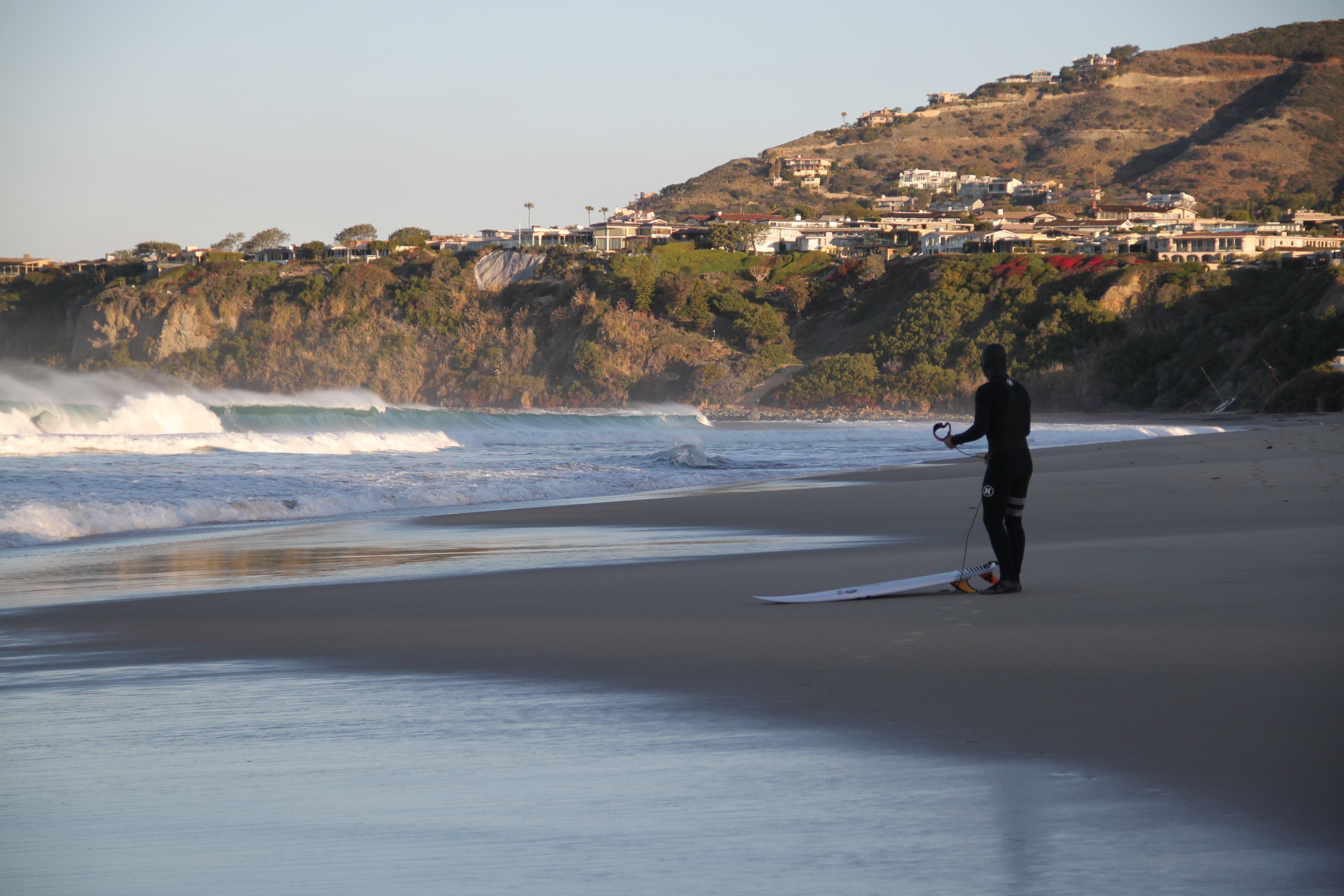
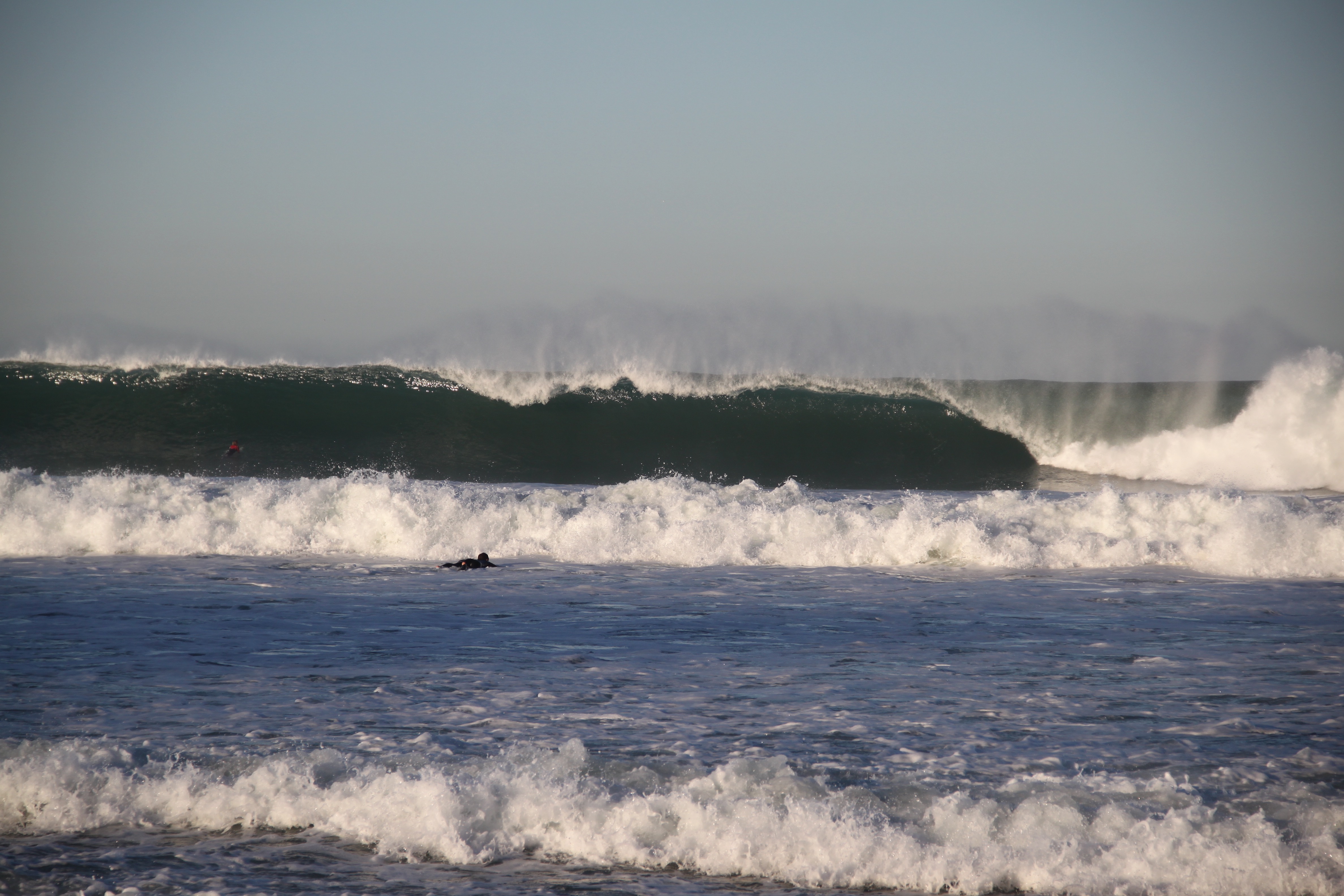
Marching to detonate

There will always be more waves and you will only be that much more prepared once they roll through again! All the more reason to cherish those epic days when everyone at your break is scoring waves, even your newbie self. Some of my most memorable and special moments were at Lower Trestles with 50 people out during a firing swell. Smiles all around, enough waves for everyone, sunshine and dolphins …it’s magical. But don’t expect this every time. More often than not, waves won’t be perfect and the locals won’t always be in a giving mood. So sack up and practice that cardio! It’s not the end of the world! :)

Until then–absence makes the heart grow fonder.