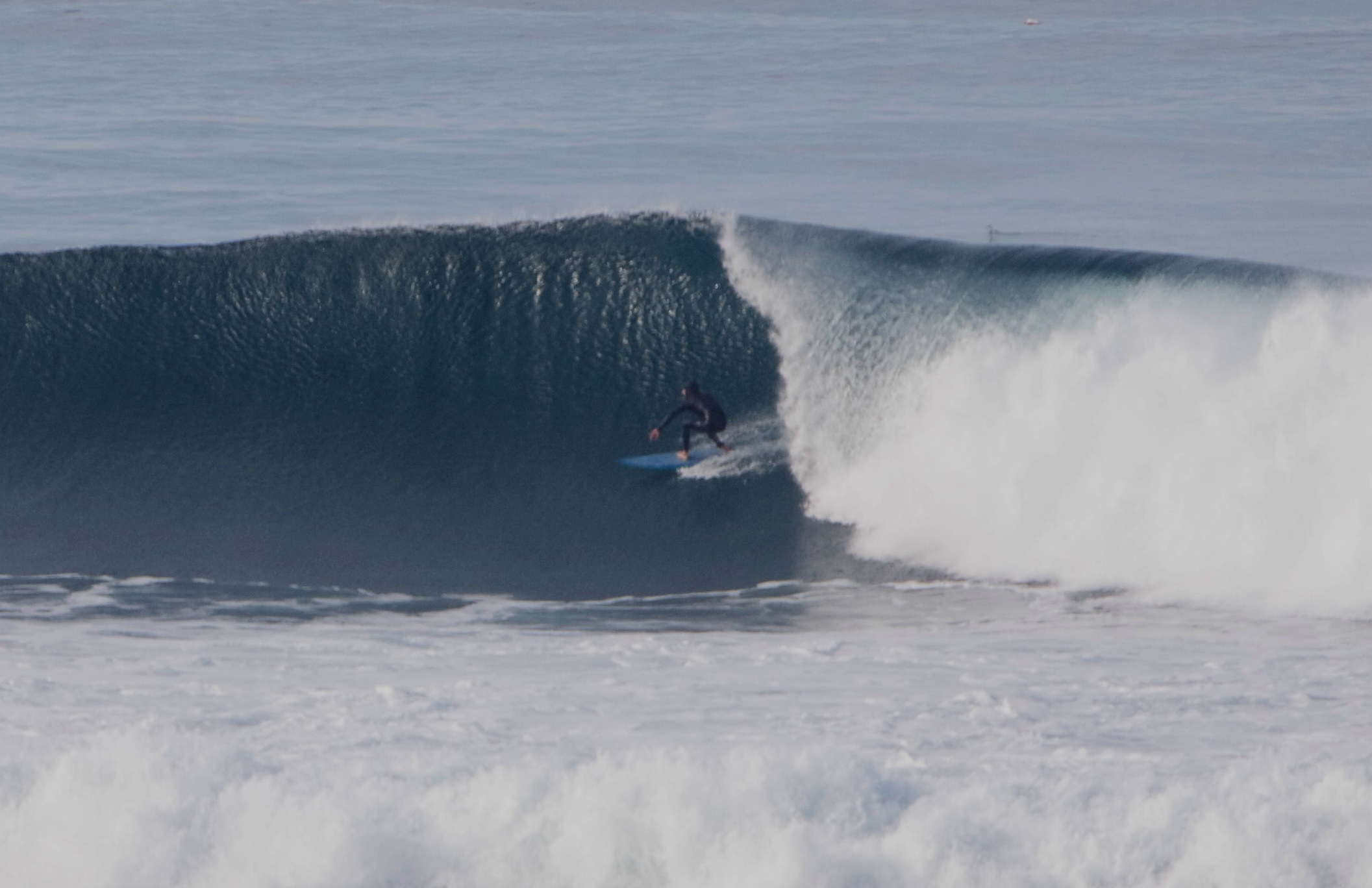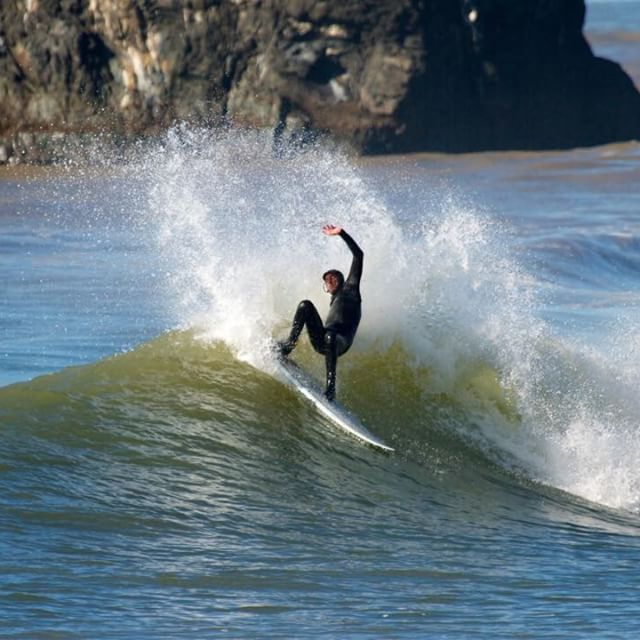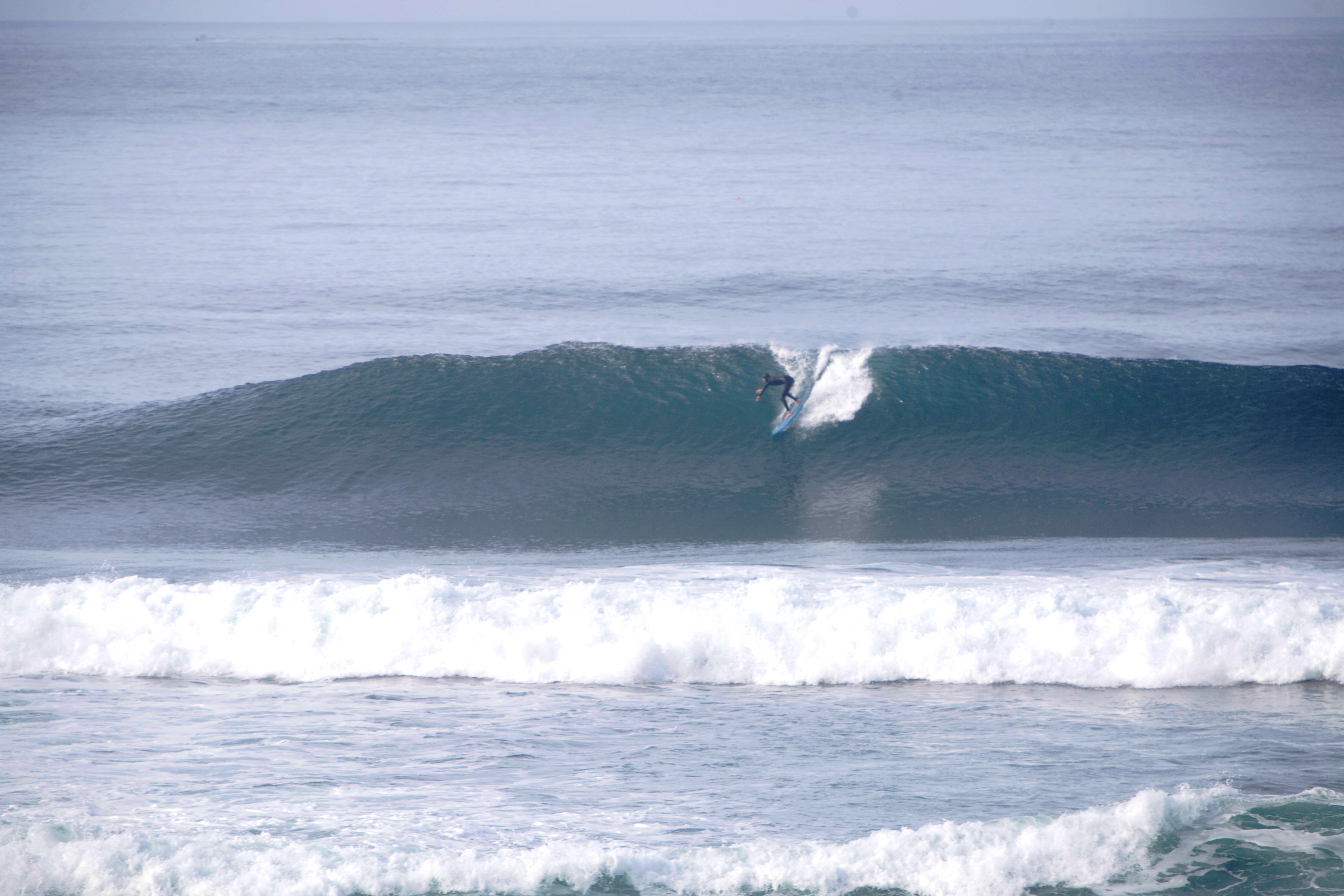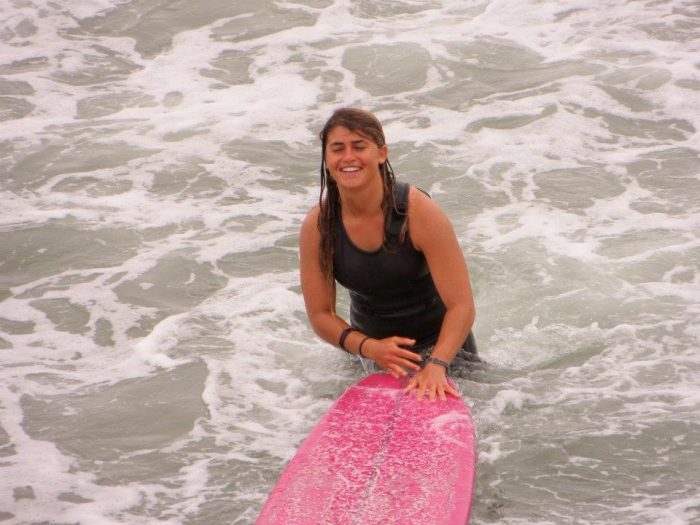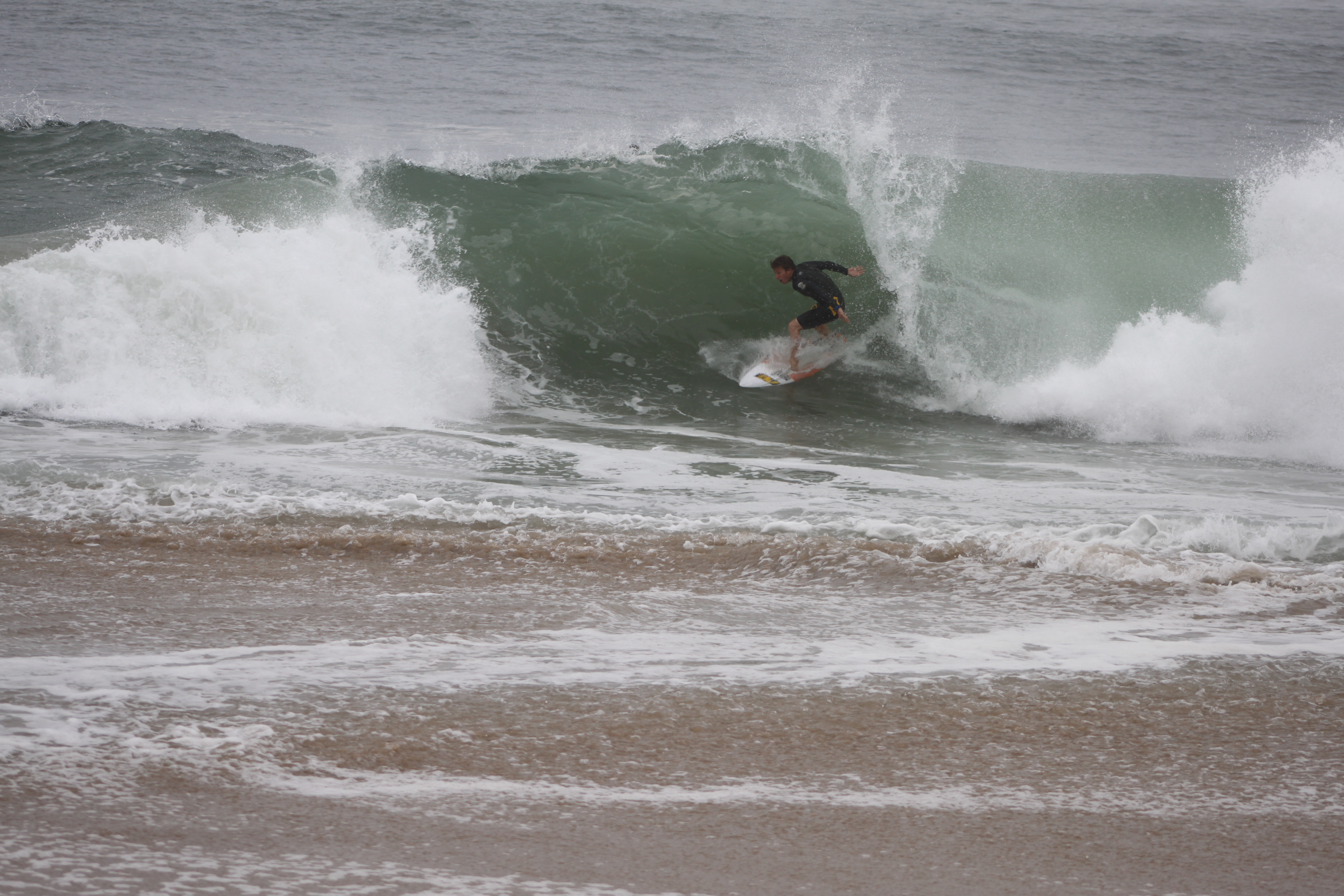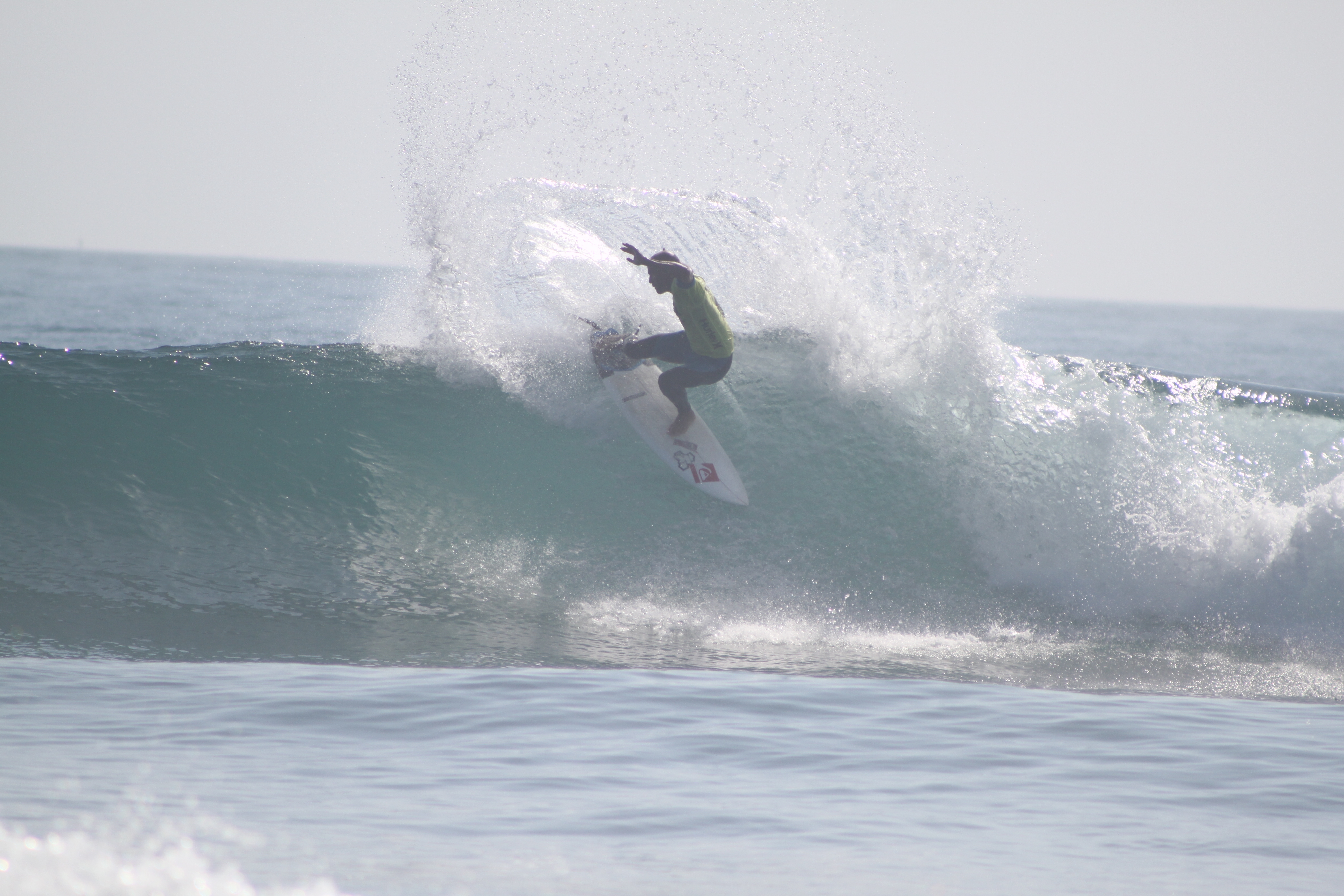
Surfing Deep in the Heart of Texas at NLand Surf Park

Just outside of Austin, Texas, sits a giant pool, as large as approximately nine football fields, that is literally a perfect wave machine. Not to be confused with our jargon-ish “inlander” term—NLand Surf Park is the closest any central Texan will get to learning how to surf without paying lofty vacation package prices.

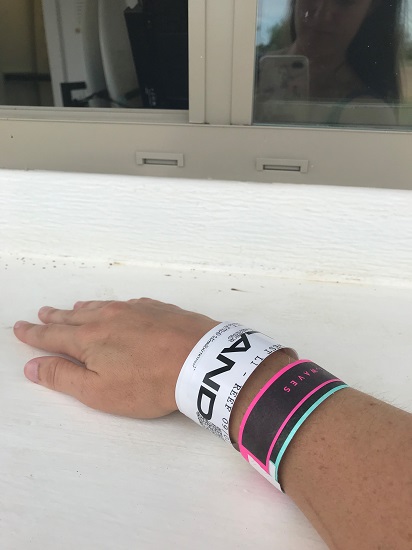
Make an expensive-ass reservation, drive to the boonies, park, sign your life away (waiver), watch the do’s and don’ts video, strap on a ton of wristbands, and pick your stick–if you’re renting.
Pretty sure I wasn’t going to Schlitterbahn…
...Schlitterbahn??

…Schlitterbahn??

Visitors have three different wave options, depending on experience level:
1. The Bay
2. The Inside
3. The Reef

If you are learning how to surf, The Bay and a soft top board are your best bets.

If you’re feeling a little more confident and want a step up from the whitewash, The Inside and a soft top board or a longer standard board are good choices for you.

If you are confident in your surfing skills, know how to pop up, drop in and cruise (and want those thighs to burn), The Reef (& the rest of the NLand quiver) are your digs.

Between the serious Texas heat, humidity and thunderstorms popping up on the flat horizon, the water temperature is a balmy 85 degrees and incredibly murky and brown. Think Nicaragua or Costa Rica.

So, absolutely no wetsuit, spring suit or even rashie required.

And to state the obvious: no need to worry about sharks or crocs, this water is fresh, which makes it a bit denser than our beloved ocean water.

Although the park offers a pretty decent quiver, which includes Channel Islands, Russell, Timmy Patterson, etc… if you are very insistent on bringing your own board, bring your floatiest and fattest. In fact, you know that one epoxy board that you got because it was trendy at the time and it’s now collecting dust in the back of your garage because it floats you too much at your local spot?
This is its time to shine.
Dust that puppy off and tote it to kicker country, if your heart so desires.

Channel Islands/Al Merrick's 5'8" epoxy flyer.

My ride: Channel Islands 5’8″ epoxy flyer.

But, it will cost ya a chunk of change and it’s probably not worth the board bag fee since, well, this is one of the ONLY worthwhile “breaks” around for hundreds of miles, unless you plan to skip off to Central America, OR you have solely dedicated a “surf” trip to Austin–said no one ever.

I was a little nervous to leave my surf fate up to the park’s quiver, but I found their 5’8” epoxy Channel Islands Flyer worked perfectly.

Now for the wave—it’s interesting.
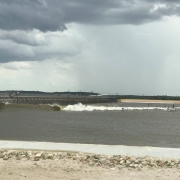
The wave is based on a blade-shaped technology called the wavefoil, which hurtles at a specific speed from one end of the lagoon to the other underneath a “pier” lined by a chain link fence to create a wave that adjusts to the pool bottom’s customized bathymetry, or the water’s depth. When I asked for specific wave heights, the park staff said “8 feet” for the reef, buuut–I think it was more like 6 feet.

Before I even entered the water, the very kind staff reiterated multiple rules, which made smoke come out of my ears.


Can’t I just paddle out and figure it out?

Nope. They said if anything, remember this:
“Paddle out” right by the chain link fence, drop in at a 45 degree angle and make sure you drop in as close to the fence as possible.

Okaaaaay. So, no duck diving?

Nope.

K.

I’m not sure if it was my unusual two cups of coffee or all the rules that were unloaded into my brain, but suddenly, I was nervous. This ain’t the ocean, I’m not paddling out to Trestles. I’m going to ride a man-made wave, how the hell am I more nervous about a man-made wave?! Surely, any break in California would greatly disagree with my odd jitters.
I mean, the reef breaks bigger than what I usually prefer, but, as my grandma always said, que sera sera.
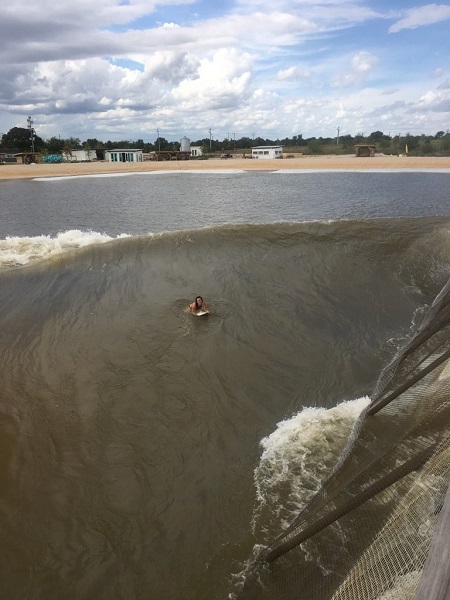
No duck diving required, no sharks or crocs spotted.

No duck diving required, no sharks or crocs spotted.

After paddling out, I sat by the marker on the far end of the “pier” for the left-breaking “west reef” wave. Man, why’d I choose backside?!
Suddenly a small roar sounded about 50 feet behind me and the wave appeared out of nowhere. I paddled a few strokes and popped up. Rode it a little bit before I lost the face and succumbed to the whitewash.
Okay cool. I guess I can do this, I thought. I got a few tips from the helpful lifeguards and paddled next to the chain link fence towards the right.
Once the wave jumped into view, I took off and trimmed immediately to the right, where I successfully stayed on the face and rode the wave all the way to the “inside,” kicking out with a boost of air and a canon ball, thighs shaking from the ride.

Yelling out “yew” seemed odd, and so did “yeehaw,” so I settled for “owww!” And paddled back out for another…

Conclusions:

A man-made surf experience helped me appreciate the small things about ocean surfing. Unlike the ‘au naturale,’ wave parks are scheduled/predictable, there’s no aquatic wildlife to observe, the water is, well, warm but ugly, every wave breaks perfectly, and I’m sure if you would consider anyone as a “local…” Maybe the lifeguards?? I certainly didn’t see any 10-gallon hats bobbing around the oddly shaped ‘lineup.’

Even tho this wasn’t ocean surfing, I definitely felt like I was in a better mood once I was done. But that better mood cost me about $200 for two hours.

After leaving high school and Austin for college in California, I once told my friends that if Austin ever builds a wave pool, I will move back. While I’m not exactly eating crow, I did consider it for a New York minute as I do have a soft spot for Texas. But! Living and “surfing” in Austin would be incredibly unsustainable for the amount of time I would need per week. At minimum-with NLand’s pricing, I would require at least two hours for two days on the weekends, which would come to $400 per week, that’s $1,600 a month to surf…hmmm that smells like California rent prices.
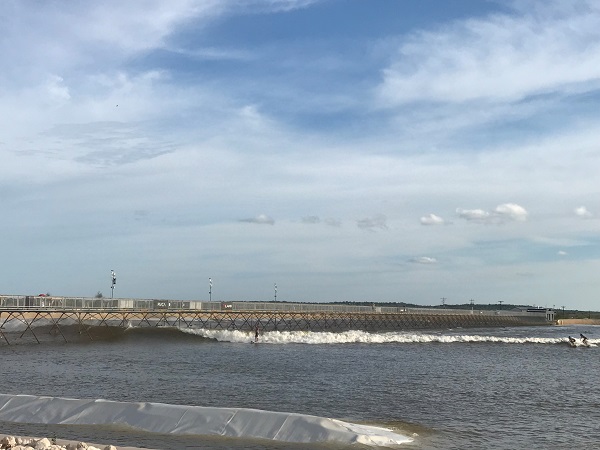
Who can complain about consistent thigh burners? Just bring down the price tag and perhaps I'll return to being an 'Austinite.'

Who can complain about consistent thigh burners? Just bring down the price tag and perhaps I’ll return to being an ‘Austinite.’

Not to mention I would sorely miss the ocean in general and become incredibly bored with the predictability of the same wave day after day, session after expensive-ass session.

Although it’s fun to feel my thighs burn (baby!) and encourage beginner folks to go for the ‘Reef’ wave, I know that for the same $400 or less, I could pop over to Baja and find something similar–cold water temp and possibly sharky, but similar.

Sorry Austinites, breathe a sigh of relief because this California transplant is staying on the west coast.
Maya Gabeira Surfs Biggest Wave by a Female Surfer…Gets Blown Off by WSL

On January 18, 2018, renowned Brazilian big wave surfer Maya Gabeira charged the mountainous peaks of Praia do Norte in Nazaré, Portugal. According to videographers, oceanographers and academics, her wave clocked in at 80 feet.

8-0, people.

Let’s take a moment to marinade on that number.

That’s eight stories tall…when the rest of us are shaking in our boots over 10 feet, multiply that by eight and that’s what Gabeira rode. The hard-charging waterwoman matched Garrett McNamara’s November 2017 record of 80-feet at the same break.

“Since 2013, I have been trying to bring the idea that we should have a women’s world record,” said Gabeira. “I started talking about it through emails with The Big Wave Awards, which, a couple years back, was bought out by the World Surf League. Since 2013, I have had very vague responses on it…nothing was clear at all.”

Aside from being one of the most decorated and pioneering females in the big wave arena, her 2018 wave was not Gabeira’s first record-breaker. In 2009, she broke the record for biggest wave ridden by a female at Dungeons in South Africa clocking a 46-foot ride, nearly half the size of her Nazare wave.

With her mind focused on riding the world’s biggest waves, Gabeira set her sights on Nazare’s massive size-holding capabilities, a wave that nearly ended the young charger’s life.

In 2013, Gabeira nearly drowned after wiping out and losing consciousness on a massive wave at Nazare.

“It almost ended my career with the complications I had with injuries and to come back and be able to surf, it was already my dream,” said Gabeira.

After five years of dedication, recovery and training coupled with her passion for big waves, Gabeira put pedal to the metal and caught a massive mountain of water–a wave large enough to put her in the Guinness Book of World Records.

Photo Courtesy of: Stephanie Johnes Maya would go.

Photo Courtesy of: Alex Laurel
Maya would go.

When Gabeira approached the Guiness Book of World Records, they referred her back to the WSL for certification.

But despite reaching out,  the WSL gave very vague and inconsistent responses to Gabeira’s amazing accomplishment. Every few weeks, Gabeira followed up with the WSL and still no confirmation of any progress. Frustrated with the organization’s lack of support or responsiveness, Gabeira let them know her intentions and in August 2018, started her petition.

Although, the organization did at the last minute ask her to present at the annual Big Wave Awards this past April for the Men’s Big Wave Award of the Year. To add more salt to the wound, during the women’s division, none of her clips were displayed.

“I had to hold my tears, breathe and go back stage to then present the men’s division,” said Gabeira. “I was kind of really baffled because I flew all the way to LA to not see any of my waves [displayed], to be celebrating the winter and pretend I wasn’t participating in the winter. While all my [male] peers had all their waves they rode on the same day exposed and won awards and records.”

After multiple backstage apologies from the WSL’s director post-awards, Gabeira sat down with him where he reiterated the WSL’s interest and dedication to her accomplishment. But radio silence from the WSL soon followed…again.

“I just want this [record] to be established because I think it’s important for women–it’s always been to me, at least” said Gabeira. “When Garrett [McNamara] discovered Nazare, it’s always left such a big impression on me to be able to see somebody credited with “The biggest wave ever” and have a number on it. Being in a sport that’s very subjective, it was something that I got attached to. I just want to finish it off so the next person doesn’t have to make it all happen from the beginning. They can just have the category established, surf a bigger wave and break the record and BOOM–it’s registered.”

With the WSL’s recent leadership falling under CEO Sophie Goldschmidt, Gabeira was hoping this would propel the industry and open a new chapter for women in the sport. The WSL gave this response via email:

“We have a huge amount of respect for all our big wave surfers. We have been in active discussions with Guinness for some time on the topic of reviewing Maya’s incredible ride from Nazare earlier this year for submission, and look forward to continuing to celebrate men’s and women’s big wave surfing with an announcement soon.”

The WSL got back to me within hours with this response, however, when I asked them specifically why the process took as long as it did and why the WSL couldn’t give Maya a solid answer, I was told…(am I surprised?)–> all they could say was just that.

“I don’t know if it’s just a lack of professionalism or if it’s just a lack of care for an athlete,” said Gabeira. “It’s my job, it’s what I’ve done for many many years of my life and to not take that seriously, it’s extremely disrespectful and it really hurts.”

To no surprise, after Gabeira’s petition launched and the world became aware of what was going on behind the bro-curtains of the surf industry, the WSL now crowds her inbox. :)

Best of luck, Maya. We are rooting for you! <3

Check out Maya’s video:


Operation Surf Takes Surf City by Storm

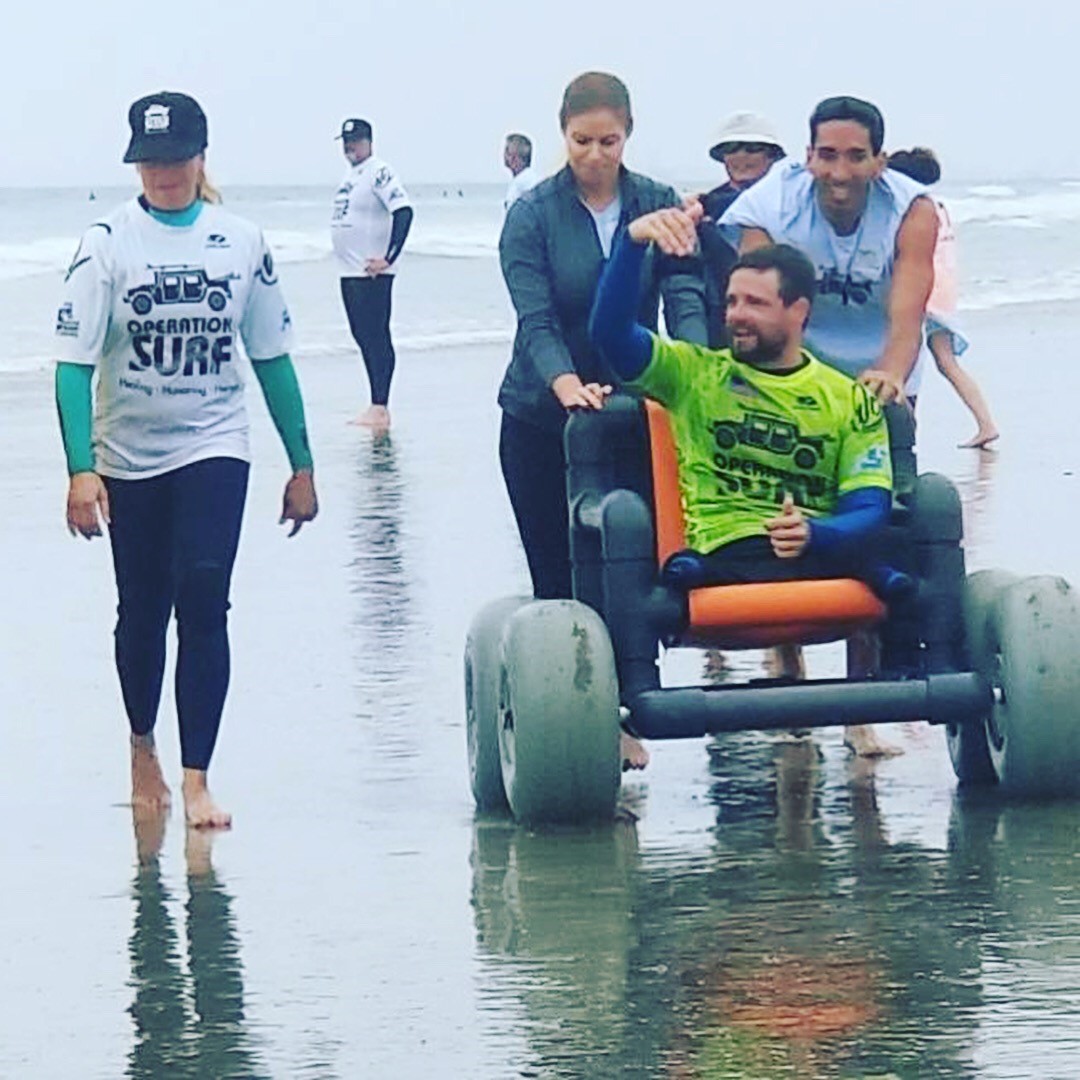
On Sunday, June 3rd, a motorcade could be seen trailing a Hummer limo that carried 26 veterans and active duty military through downtown Huntington Beach. Locals lined the streets waving mini-American flags and cheering for those joining Surf City’s week-long annual “Operation Surf” program, which is dedicated to exposing veterans and active-duty military to the healing power of the ocean through adaptive surfing. The program helps participants work towards overcoming perceived limitations connected to their physical and psychological disabilities.

Relaxing on the beach before a surf session. Photo Courtesy: Operation Surf

Relaxing on the beach before a surf session. Photo Courtesy: Operation Surf

For one week, Huntington Beach Pier’s Northside was packed with anything but grumpy locals. In fact, most of these locals were smiling, cheering and pushing folks into waves.

“The ocean has a healing aspect to it and when we work together as team to learn to surf, we create new reference points that help us change our perceived challenges,” said Danny Nichols, Huntington Beach Event Director. “It also teaches us that we are not different. Yes, we may have certain physical or mental challenges, but we are all in this together and knowing that creates harmony and trust within this group.”

Military often experience traumatic body and brain injuries, which can lead to post traumatic stress disorder (PTSD). According to the U.S. Department of Veteran Affairs, PTSD is developed after experiencing or witnessing a life-threatening event, like combat, a natural disaster, a car accident, or sexual assault. One in three combat troops report symptoms of PTSD.

Pure stoke. Getting read for another wave in Huntington Beach. Photo Courtesy: Operation Surf

Pure stoke.
Getting read for another wave in Huntington Beach. Photo Courtesy: Operation Surf

In recent years, “surf therapy” has been studied as a way to relieve symptoms of PTSD. In the book “Blue Mind,” author Wallace J. Nichols’, Ph.D., explores the effects of water on the human psyche. In a not-so-recent article, Dr. Nichols highlights that unlike a busy city street, because of nature’s high predictability, it allows parts of the brain to “relax.” The movement of bodies of water (a.k.a.: waves), causes a “surprised” feeling, which leads to the release of dopamine, the coveted ‘reward-pleasure’ neurotransmitter we often receive when we score a great wave.

Dr. Nichols says that because bodies of water change and stay the same simultaneously, people experience both soothing familiarity and stimulation or the perfect recipe for triggering a state of involuntary attention, a key characteristic of problem solving and creativity.

On Friday, June 8th, I got the opportunity to volunteer with Operation Surf, to help with inshore safety by assisting veterans in and out of the water. Some folks were old pros at catching waves and others were still learning to cruise the whitewash, but none of that seemed to matter–the overwhelming camaraderie made me wish I could have participated the entire week, but day jobs do call.  The stoke was truly palatable when I watched a young lady score great rides and feverishly paddle out for more, an infectious smile constantly plastered to her face. The city of Huntington Beach truly came together in full force to support everyone involved in the event.

It was refreshing to see the amount of love and support throughout this tightly knit community. For a week on the northside of Huntington Pier, a spot noted for it’s territorial locals, those same locals were pushing folks into waves, smiling, hugging, and encouraging even myself to paddle out.

HB, you have my respect. <3

Product Review: COR Surf’s Excursion Waterproof Travel Pack

If it’s not obvious already, I LOVE to surf Trestles…along with thousands of other folks from in and out of town. It’s not just about the wave, tho. I enjoy all aspects of the experience–walking there and back again, checking out the ever-evolving street art/graffiti and saying ‘hi’ to my fellow ‘Trestlers.’ While surfing Trestles for many years, I have learned that high quality equipment is essential for a top notch surf experience–and have specifically noted the evolution of my backpack.

It started with a simple drawstring sack used to carry records, which evolved into Dakine’s backpacks. At first I adored my Dakine pack, it went with me everywhere and endured all things ‘beach.’ It wasn’t until boating out to a particular break in Nicaragua that I noticed my Dakine was not 100 percent waterproof–I almost lost function of my DSLR camera because water invaded my pack. Add on my post-Trestles soggy bottom trek back to my car and you’ve got a surfer girl determined to find the perfect pack.

Enter COR Surf’s Excursion Waterproof pack.

The deets:

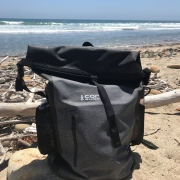
Designed for a two-seven day trip, this pack has removable interior laptop sleeve and pocket, a secret passport pocket, waist and chest straps, a top cinch strap for your towel. It is made of 100 percent TPU waterproof material–nothing is getting soaked unless you spill your drinks inside the pack–but of course, there’s a feature for that. Two drink holders made out of mesh material can be found on either side of the pack, although I like to keep mine on one side so it doesn’t bump into my board. Did I mention this particular pack carries 40 liters worth of stuff??

4-0.

If a magician were a surfer, this would be his dream pack.

What I love:

The depth…not like “letstalkaboutthemeaningoflife” depth…I mean, I can literally fit my entire head and shoulders inside (I’m also 5’3”), but the point is the pack is deep deep deep. I fit my wetsuit, towel, small stuff, change of clothes, and water with plenty of room to spare.

How I’ll use it:

Trestles and travel–seriously, this pack makes me want to travel (*cough* wheremysurfergirlsat *coughcough*)

I wish:

There was a separate area for my soggy wetsuit

Price:

On sale for $79.99

One Man’s Reflection of Two Separate Great White Shark Attacks


Royce Fraley, long-time surfer and Northern California local.

Royce Fraley, long-time surfer and Northern California local.

It’s no secret that surfing comes with its lists of risks. From drowning, bacterial infections, reefs and rocks, jellyfish and stingrays, crazy locals, to random freak accidents, the list can go on and on… There’s even rogue dolphins who miscalculate their beautiful leaps onto the unsuspecting surfer. Ouch.

But none other than one of our most widely whispered topics, SHARKS, are more associated with the risks of being a surfer.  Royce Fraley, a long-time surfer based in Occidental, California, is incredibly aware of this risk and has encountered our infamous grey suited landlord not once, but twice in the chilly Northern California waters.

“In both situations, it’s amazing how your brain kicks into a ‘fight or flight mode’ real quick,” said Fraley. “You automatically want to believe it’s not happening to you, but it is. All these thoughts happen within milliseconds.”

Like jelly to peanut butter, sharks and surfers go hand-in-hand by reputation, sans, well, let’s hope tastiness. In fact, based on my personal conversations, one of the most cited reasons why folks decide to not surf is because of our association with our oceanic toothy counterpart.

But consider statistics—for the average surfer who is in the water maybe not every day, but most days and is floating in the ocean for an extended period of time, what is the actual risk?

“No one plans to paddle out and hit a rock,” said Sean van Sommeron, Founder and Director of the Pelagic Shark Research Foundation in Santa Cruz, California. “Of course, every time you paddle out, you’re taking a risk. The statistics on shark attacks on surfers is very low on the list of possibilities. Surf board accidents are much higher on the list.”

Surfer Magazine did a lovely and realistic calculation for California surfer folks and concluded that California surfers have a 1-in-25,641 chance of being the victim of a fatal shark attack.

We’ve heard it all before—“you’re more likely to get struck by lightning.”

But sometimes lightning can strike twice for those special outliers, although they are few and very–VERY far between. For Fraley, who has logged more than 40 years of surfing around the world, charging double-overhead mysto reefs smack dab in Northern California’s “red triangle,” a little “brush” with our toothy landlords may be expected. However, for Fraley, not once, but twice did he pay rent and came out relatively physically unscathed.

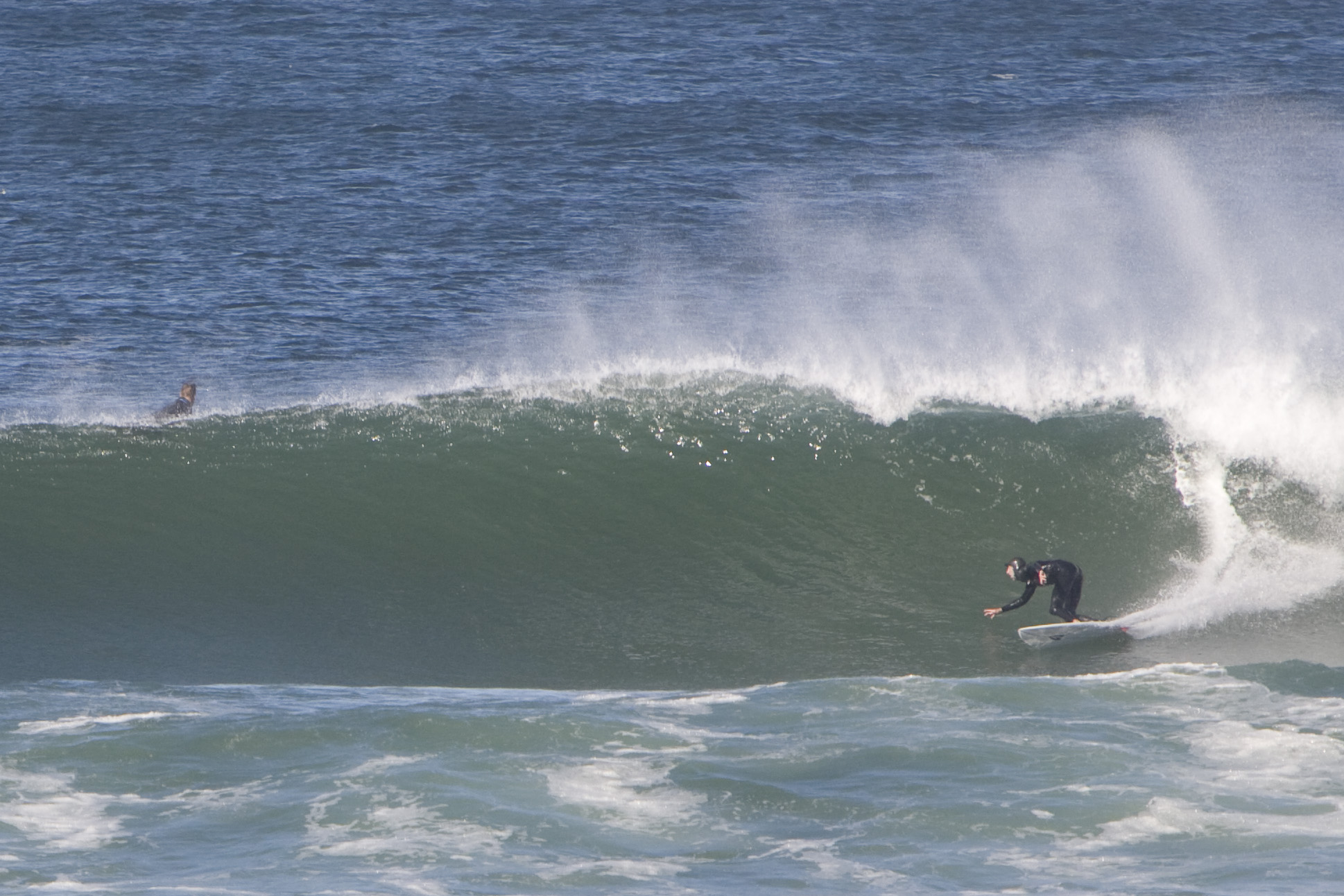
Royce Fraley charging in Northern California. Photo: Scott VanCleepmut Photography

No hesitation or barrel dodging–Royce Fraley charging in Northern California.
Photo: Scott VanCleepmut Photography

Northern California’s got a reputation among the salty-haired to mean two unpleasant things with one tempting caveat: cold and sharky…but lots of uncrowded spots! For Fraley, 10 is a crowd and spots are most often protected from wanton commercialization by thick blooded locals, that is if the break and pirate-like foggy coastline doesn’t scare you off first.

I got to know Fraley over the interwebs and he shared both stories of his attacks, which were covered by the SF Gate in 2006. More than 10 years has passed since his latest attack in 2006 and I was curious to see how he still manages to charge the crazy Northern California surf.

First Attack: September 1, 1998

Royce Fraley hacking a little off the top in Northern California. Photo by: Patrick Parks

Royce Fraley hacking a little off the top in Northern California.
Photo by: Patrick Parks

A smallish surf day brought Fraley and a few of his good friends to surf Russian River, a spot located north of Bodega Bay, which is known for beautiful scenery, abundant wildlife and draining barrels. The trio were the only people in the water. Just as Fraley’s friends caught a few waves towards the inside, Fraley laid down on his board to rest from paddling along the sandbar.

Out of nowhere, he was launched around four-to-five feet into the air and disappeared into a giant burst of whitewater.

“If you took both palms of your hands and slam them on the hood of your car as hard as you can, that was the sound of this incredible impact,” said Fraley.  “All I could see was whitewater all around me.”

Luckily, after that shocking launch, Fraley landed perfectly on his board in the water. The nose of the shark left a half-inch imprint on the bottom of Fraley’s board, even leaving behind a little skin.

“I think that shark was very surprised it hit something that was so damn hard, which was my fiberglass surfboard,” said Fraley. “That strike was like an ‘okay, I’m going in big time’ attack.”

After he landed, Fraley did not hesitate to paddle his 6’10” Campbell Brothers pintail towards the beach, his friends waiting on the sand, when he saw the water close to him swirl and watched as the shark drew up alongside him and chase him in.

“All I saw was the shark’s back and it’s dorsal fin,” said Fraley. “His dorsal was parallel to me and I was like ‘are you kidding me?!’ And before I knew it, I was in super shallow water and the shark just turned off.”

Royce charging big cold water A-frames, sans crowd. Photo: Scott VanCleepmut Photography

Royce charging big cold water A-frames, sans crowd.
Photo: Scott VanCleepmut Photography

Once he reached the beach, Fraley collapsed while his friends quickly checked him for wounds. A little shaken, Fraley and his friends decided to conclude their session with much needed tequila shots and local Indian cuisine to celebrate his most interesting, rare and harrowing encounter.

“If you’re tracking the shark, it will be eyeing you, too and eventually it will take off,” said Dr. Chris Lowe, director of the California State University, Long Beach’s Shark Lab. “If you lose track of the shark, the first place you should look is behind you because that’s what a predator, like a shark, will do–they’ll move out of view.”

Dr. Lowe explained they often see this tactic while tagging great white sharks off of Southern California’s coastline. The smaller, more juvenile great whites are more easily scared off, however, the bigger guys and gals will often move off to the side and sneak up from behind. Dr. Lowe recommends that if a surfer loses track of a shark, to do a 10-second count and look behind. Sharks can identify an animal or person’s head and might often consider the surfboard’s nose as a person’s “head,” therefore recommends a surfer to also track with their board, too.

“If their prey know they can see them, there’s a chance that the predator won’t be able to take them down and may get hurt in the process,” said Dr. Lowe. “Your surfboard’s ‘head’ will make them sense they are being watched.”

Second Attack: December 10, 2006

captionm

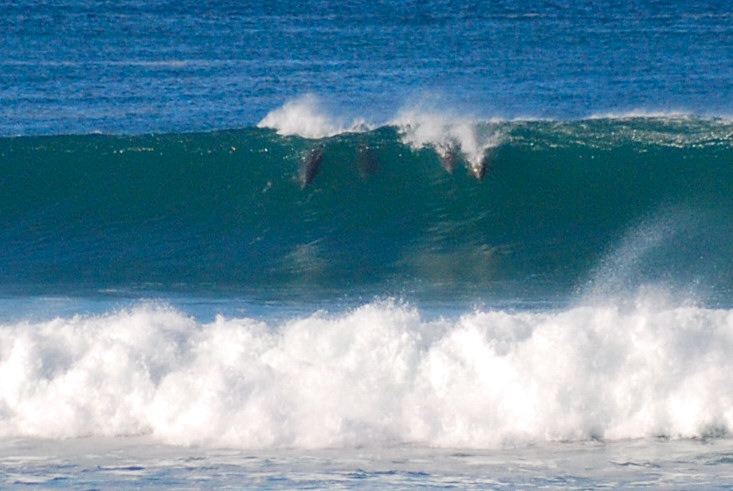
A pack of dolphins catches waves in Northern California. Photo: Royce Fraley

Eight years had passed since Fraley’s Russian River encounter, and surfing was still on his to-do list. Fraley was itching for an evening session at Dillion Beach at a spot the locals like to coin as “the shark pit.” About 1,000 yards off the beach awaits a perfect and incredibly long A-frame peak that used to produce 3-500 yard rides in the 90’s. The spot is still filled with it’s fair share of big wave action as, according to Fraley, they will often see Mavericks crews and tow-in folks cruising the out-to-sea style lineup. If the location doesn’t make you flinch, then maybe a nice long paddle over the deep channel will.

“At this point, I had been surfing this spot for 15 years, had done this many times before,” said Fraley. ” It was a beautiful sunny December evening, right after a storm. A big set came through and I caught a couple of waves, which pushed me over into the channel.”

With the increasing swell, Fraley took his time getting back to the lineup, pacing himself for more waves. He rested on his brand new 7’6″ big wave board and as he was gliding over the channel, the water around him began to boil like a cauldron, the right side of his board lifted out of the water and Fraley rolled off the board.

“It was almost like the shark was a submarine surfacing,” said Fraley. “His bottom jaw hit the underside of my board and I started rolling off as the shark bit down.”

Fraley felt a sting in his right  hip as the shark dove down with Fraley’s 10-foot big wave leash wrapped around it’s mouth. As Fraley instinctively grabbed ahold of his board for flotation, the shark dove even deeper beneath the surface with Fraley in tow. In the time spent below the surface, he experienced a gamut of emotions beginning with strong denial, anger and pain–to acceptance.

“There’s a part of me that accepted what was happening, I felt peaceful,” said Fraley.  “Right when I felt that, I bumped off the side of the shark. It felt like someone pushed my whole right side up against a school bus.”

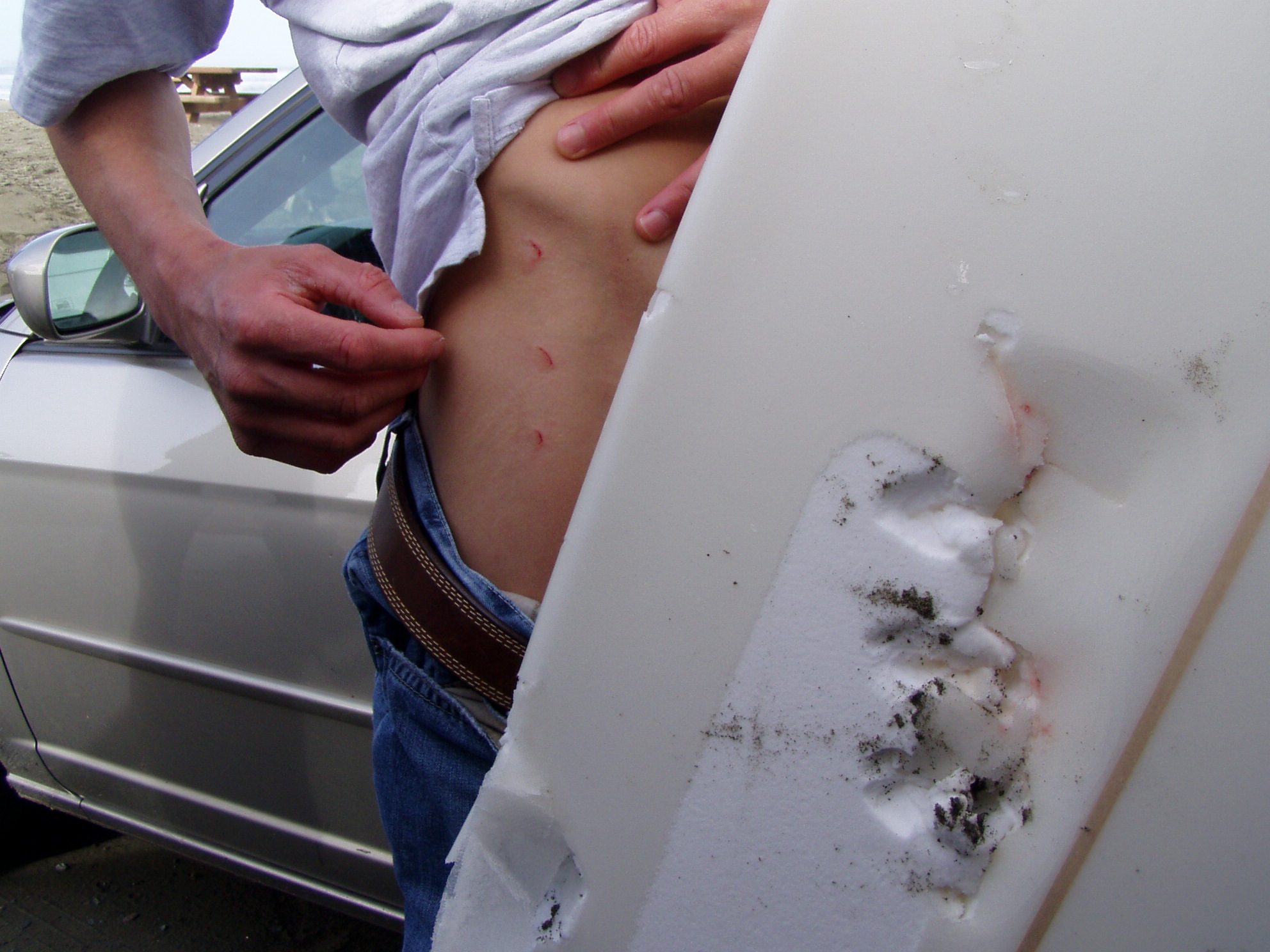
Royce shows relatively minor cuts after his attack. Photo: Royce Fraley

Royce shows relatively minor cuts and board damage after his attack.
Photo: Royce Fraley

When Fraley reached the surface, incredibly shaken, he paddled towards a surfer, who immediately paddled away from him towards shore, and Fraley was left to make the long paddle on his own. A lifeguard, Brit Horne saw the commotion and quickly came to Fraley’s rescue where he found three imprints from the shark’s teeth on his right hip, which did not require stitches.

The University of California, Davis’ Bodega Marine Lab estimated the great white shark Fraley encountered to be about 15 feet long and weigh about 3,000 pounds.

“Not all bites may be predatory, sharks may be sending signals saying ‘you better back off,'” said Dr. Lowe. “Surfers often don’t even know the shark is in the area, and the shark hits and takes off. We just don’t know what the motivating factors are prior to those bites and it’s very rare that people actually witness those behaviors happening, so we have no context.”

Post-surf/attack session, instead of tequila shots and yummy food, Fraley was greeted with a barrage of news media at his front door when he got home. Even Good Morning, America! wanted an interview, but Fraley preferred to keep the news media’s often jarring sensationalism out of his evening and simply reflect on the greater lesson.

Reflection

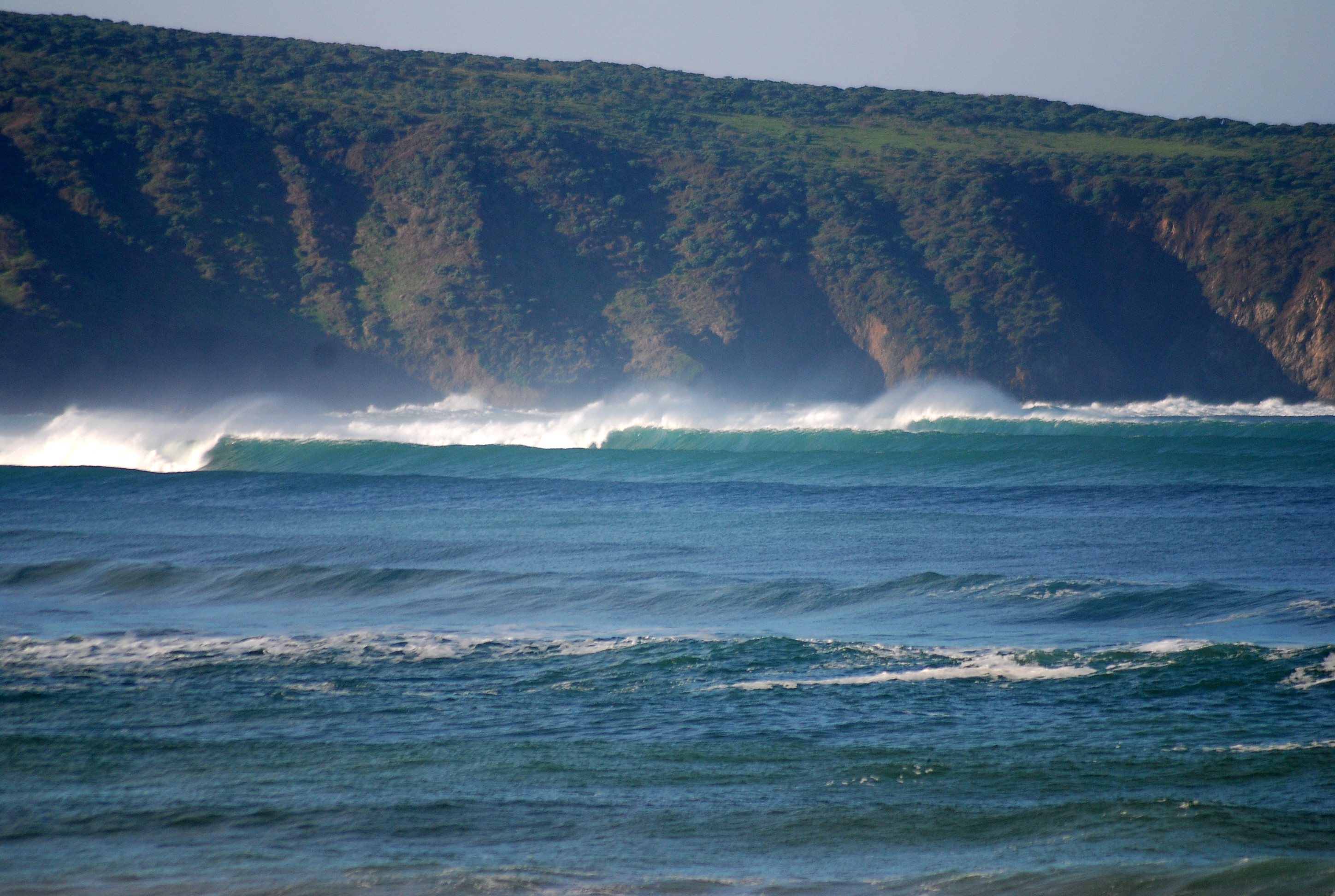
"The shark pit" looking good enough for a surf. Photo: Royce Fraley

“The shark pit” looking good enough for a surf.
Photo: Royce Fraley

Since his latest shark attack, Fraley has had time to contemplate his extremely rare attacks. Although from time-to-time, he understandably experiences a form of post-traumatic stress disorder (PTSD), Fraley still manages charge big waves, but, seemingly remains more vigilant and paddles out with friends, on most days.

“The biggie for me was to actually go back out at the same spots,” said Fraley. “I had that need to be around other people and even now, I’ll be surfing any spot and sometimes I have a mini-panic attack, It’s almost like PTSD, but I usually tell myself to calm down and breathe and that definitely helps.”

Even still–it certainly hasn’t deterred him from charging full NorCal swells. In fact, he and a few friends will often search for lonely peaks along the less traveled areas of the north coast.
“Since the shark attacks, it really made me look at the way I carry myself and the way I am with others,” said Fraley. “The sharks taught me to get over myself, be humble, be considerate of others in and out of the water, to have a reverence for every moment you have, and to get over your own bullshit.”

Similar to how Native Americans often associated these experiences with predatory creatures, Fraley relates to this school of thought and sees both encounters as blessings.

“That’s how I have to look at my situation,” said Fraley. “It taught me to have a little bit more respect for yourself and life. It helped me realize how precious things are. So much of our society is ‘dog-eat-dog’ when we should be giving waves away, hooting someone into waves–bottom line: don’t be freakin’ selfish.”

Another Royce NorCal nugget. Photo: Scott VanCleepmut Photography

Another Royce NorCal nugget.
Photo: Scott VanCleepmut Photography


Nine Questions for Sensi Graves, Kiteboarder & Bikini Designer

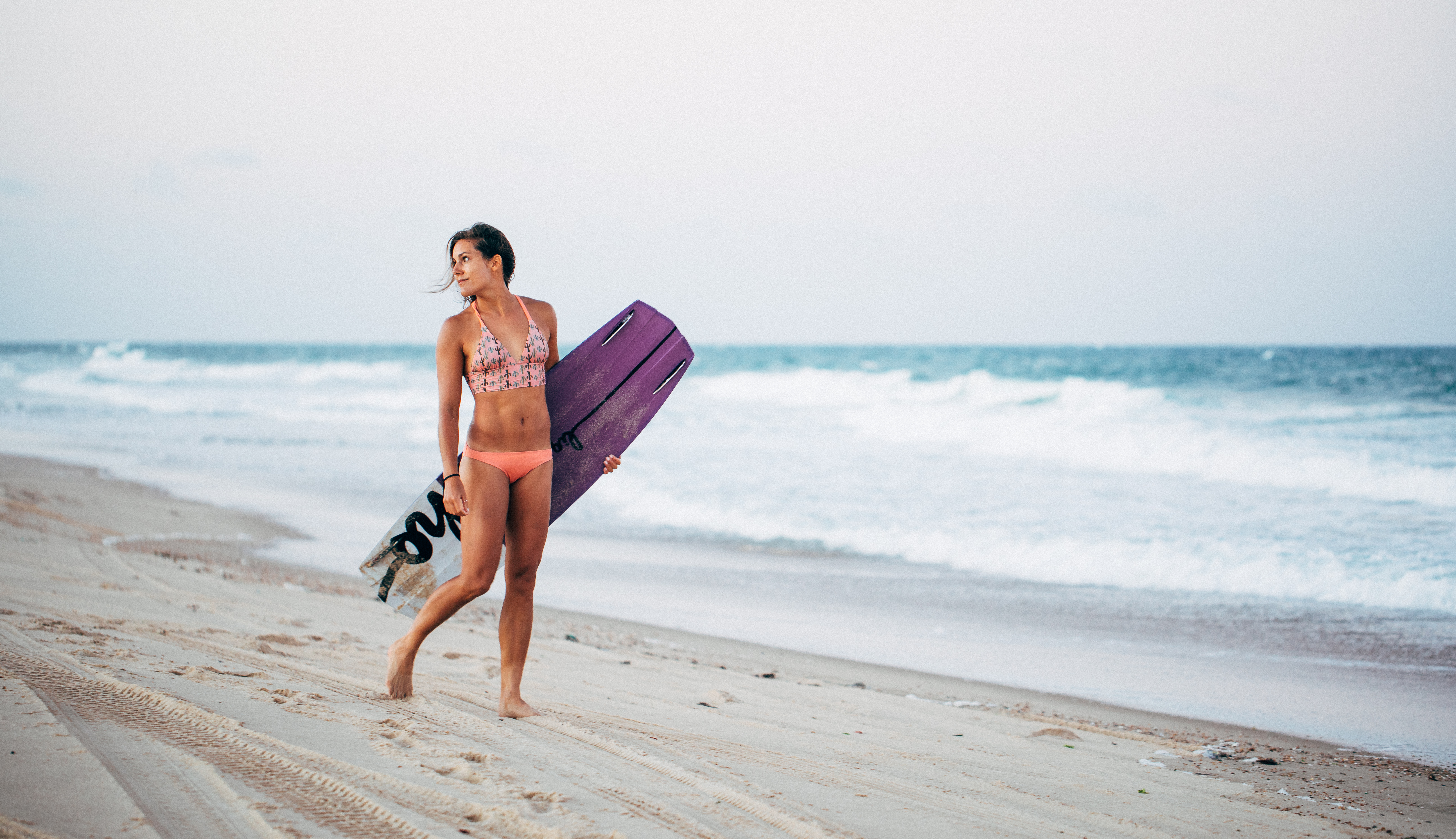
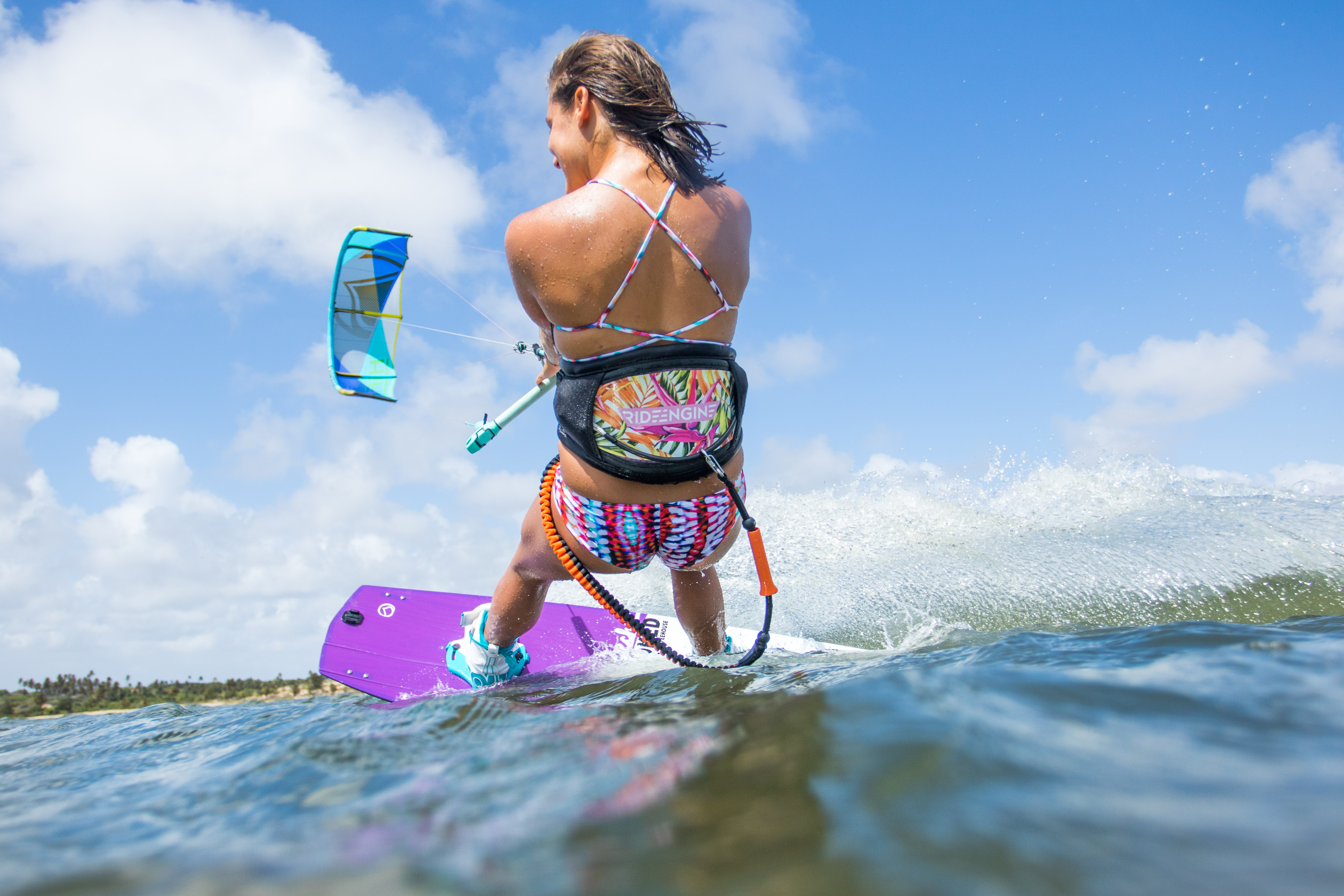
About 10 years ago, Sensi Graves picked up a kiteboard in North Carolina, didn’t hesitate to shred it and never looked back. Much like how we fall in love with a board sport, kiteboarding took the Hood River local by the arm and led her down a path of adventure, friendship and, in 2012, to start a swimwear business. The elusive “perfect” action sports bikini constantly escaped the many who tried, and few seemed to conquer in the early days, which is exactly what lit the fire for Sensi–enter Sensi Graves Bikinis. Her suits were created and are designed out of the clear need for women who once struggled to enjoy action sports and still retain a feminine appeal during a swimwear fashion v. function era.
Fast-forward only five years later, and you will find women all over the globe kiteboarding, surfing, adventuring, diving, practicing yoga and playing volleyball in her bikinis. When I first saw a Sensi bikini in an online store, I thought the name to be fitting with surfing’s niche culture–very feminine and strong, much like her bikinis. Interestingly, it was kiteboarding that drove her to create a bikini line that looks good while staying put.

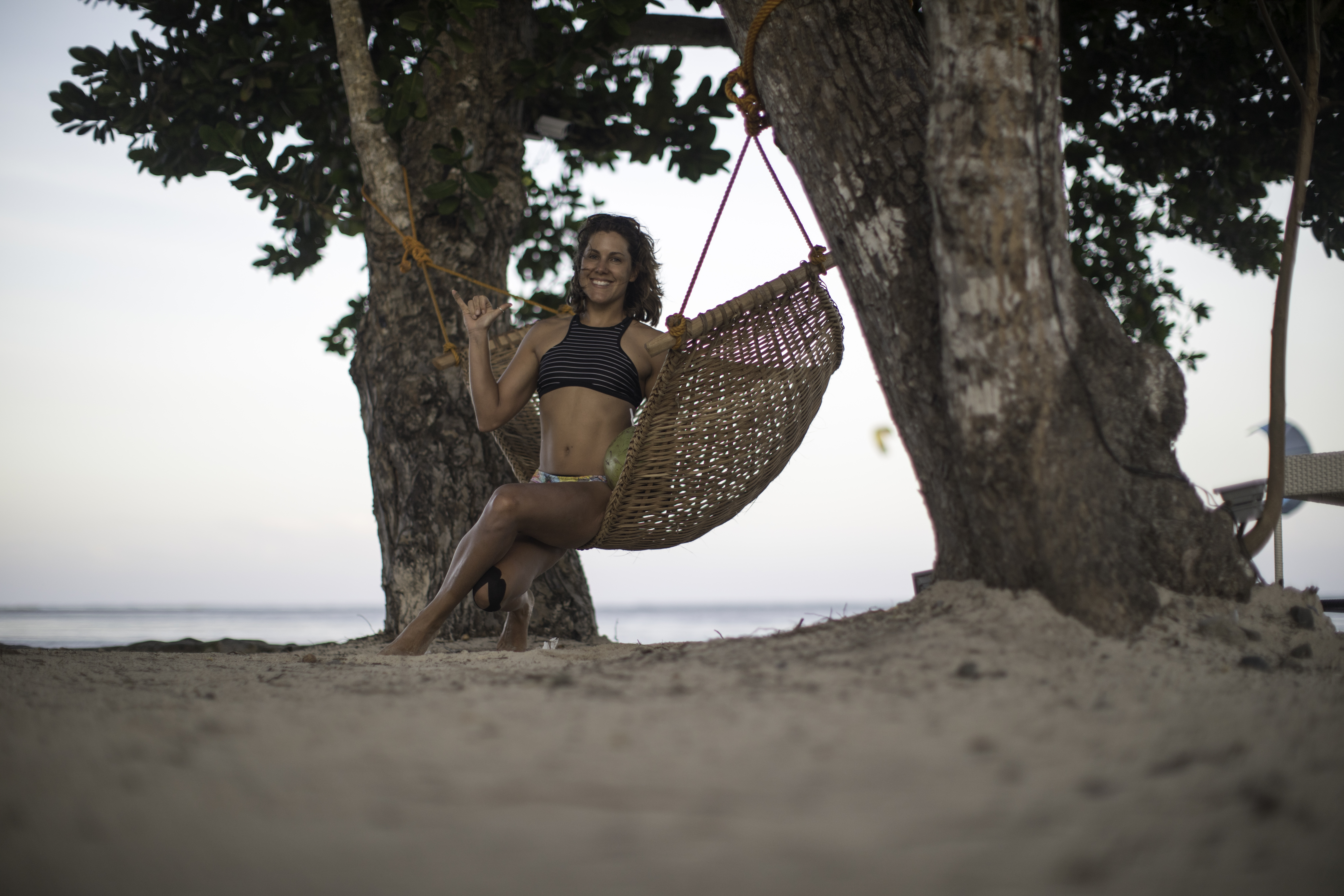
*All photos picture Sensi in action and are courtesy of Sensi Graves & Sensi Graves Bikinis.*

Read more on the woman behind the ‘kini:

Q: What made you want to create your bikini line?

A: The concept for Sensi Bikinis was born out of a need. The summer before I graduated college, I moved to North Carolina to coach kiteboarding. I was in the water every single day; teaching, kiting and surfing. Bikinis were my uniform and my recreational outfit. I quickly grew tired of adjusting my swimwear. We’d teach for three hour time blocks and my suits were just not comfortable to wear for that long. The pieces that were designed to stay on were frumpy and geared towards a much older audience. I was 23 and I wanted to look and feel good in my bikini, but I also wanted something that would perform. I decided it was time to do something about it–and Sensi Bikinis was born!BetsyLindsy_Grapefruit2

Q: What does Sensi Bikinis represent for women?

A: Sensi Bikinis represents a mindset that we are strong, powerful and beautiful creatures. We embrace and celebrate our bodies and not judge ourselves.  We empower our customers to get out there and try new things and want to give them the confidence they need to do what they love. For us, that starts with delivering a well-fitting, comfortable and supportive bikini that is, at the same time, fashionable, flirty and makes our customers feel good while wearing it–all while delivering peace of mind that it will perform. We want to show our customers what’s possible for us, as women!

Q: What is your most popular bikini right now and why?

A: We have a few current top sellers: the Colleen top and Kyla bottom and the Dawn top. Most recently, we’ve seen an uptick in the Jennifer bottom, the Katie top, and Elise bottom, which just won the 2017 SELF Healthy Living Award for “Best Two-piece that Stays Put.” Our designs are clean, unique and comfortable, which delivers all the best swimwear qualities.

Q: Tell me about your love for kiteboarding–what keeps you coming back for more?

SENSI GRAVES-lukas-stiller-DawnJennifer_TechnicolorKiteA: I learned to kite in 2007 when my dad brought my three brothers and I out to North Carolina. I hadn’t even really seen the sport before then and had no idea what I was in for. After two weeks, I fell in love and kept in touch with the school where I had learned. In 2009 I had the opportunity to move out to North Carolina for the summer to work as a kite instructor and I jumped on it. From that point on it was live, eat and breathe kiteboarding. I just fell in love.

My favorite part about kiteboarding is the freedom. You can take it so many places: in the waves, in the flat-water, on exploration missions… There are so many different aspects of kiting–whether you go for a solo soul cruise or are out with friends.

The community in our sport is also amazing, you won’t find a better group of people anywhere. I love that you can meet up with like-minded individuals all around the world and connect over this amazing sport.

Q: Do you compete?

A: Yes. I compete in a number of kite events throughout the year, namely on the Kite Park League World Tour. Our season just ended and I finished third overall.

Q: Have your ever tried surfing or any other extreme sports?

A: I love surfing. It’s by far the hardest board sport, you have to really watch and learn the ocean. But, once you’re on that wave, it’s the most exhilarating feeling. I can’t get enough. I’m also an avid snowboarder and mountain biker.TOBY2590

Q: Do you do any cross training for kiteboarding?

A:Kiteboarding is an all-over body workout, so many types of training get you in shape. Personally, I do circuit training, yoga and ride at cable parks. For the discipline of kiteboarding that I compete in (park riding), cable parks are the best cross-training that exists.TOBY5645

Q: What is your perfect kiteboarding day?

A: Waking up to a slight breeze rustling the trees. Enjoying a leisurely breakfast and coffee with friends. Riding in a slider park in tropical weather until I simply can’t any longer. Eating a fresh lunch. Taking a nap. Finally, ending the day with a foil session (another discipline of kiteboarding) as the sun goes down.

Q: Any advice for people who want to try it?

A: Take a lesson. You’ll need the basics and it helps immensely to have someone there, holding your hand as you learn to control the kite. Kiteboarding is all about kite control. Get good at that first before you attempt the board.

Check out Sensi’s bikini designs in action on:
Instagram
Facebook
Pinterest


Seven Jedi Mind Tricks that can Save Your Crappy Session

By: Shawna Baruh

The best surfer is the one having the most fun, right? What if the waves suck or you suck or some punk keeps dropping in on you–still having fun?
Here are seven Jedi mind tricks that can help you have a great time, even when you have all the reason not to:IMG_8320

1. Set Low Expectations

We’ve all heard that surfer in the line-up screaming profanities at themselves when they blow it on a wave. They are not having a good time. Don’t be in a one-man contest. No matter what the conditions are, if your only goal is to strengthen your paddle and catch a mediocre wave, then you are more likely to have fun. The pressure is off at that point. I usually do this if the conditions are terrible. Once I make my session only about ‘paddling and exercise,’ any wave I get is a bonus.
2. When the Inevitable Quarrel Arises…

Don’t fight back. If your goal is to have a pleasant session, any altercation is going to bring you down. People are going to be assholes. And for some reason, it’s double-time in the water. Even if they are wrong, you are better off paddling away. I’m speaking from experience of doing the opposite. I have tried talking about it calmly and defending myself. It never works. Let the assholes be assholes while you keep your stoke.

3. Turn Crap into Gold

Ouch. Surfer at Wedge about to eat his breakfast...in sand and sea water.

When I do have an altercation in the water, I try to put my fragile ego aside and think ‘what can I learn from this?’ As cliché as it sounds, it can be powerful.
For example: while longboarding I saw a set wave and started to paddle for it. There wasn’t a person near the peak and I was closer than anyone else. As I paddled towards it, I noticed a guy paddle-battling me from behind for the same wave. I was closer to begin with and in position for priority, so I stayed my course, got to it first, as expected, and caught the wave.
As I took off, he screamed at me. I paddled back to him and asked him why he yelled at me. He told me to “Fuck Off” and then paddled away. The next wave I caught, he screamed at me as I got up, again. I kicked out of the wave and I asked him again what the hell his problem was. He said I was  “catching too many waves.”
Before this, I was having a mellow session. It was not crowded, the surf was 2-3 feet and fun. I was catching a lot of waves, but I wasn’t burning anyone. I tried staying calm while attempting to talk to him about it, but all he wanted to do was fight. I paddled away and tried to ignore him, but the damage was done. I was no longer having fun.
So, I asked myself “Could I give more waves away?” Maybe I could let some go by every now and then. At that point, I decided during every session, I would give away waves, for no reason other than ‘just because.’ It has been incredible. People are so thankful and approach me in the parking lot to give thanks. It has raised the quality of my sessions like I never thought it would.
So, to the assholes out there – I will turn your shit into gold and have an even better time. :)

4. Break the Silence

Epic tales of uncrowded points, sketchy roads...and bodily functions, of course.

Breaking silence and beer caps in Baja.

It’s okay to talk to strangers. Compliment someone on a nice wave, ask a question about their board or introduce yourself. You’ll be surprised how many surfers are open to conversation.
Drop “yews” on anyone getting an exceptional wave, or express your ‘stoke’ for the beginner you just saw make a break through. Remember what it felt like to catch your first wave? Pour some gasoline on that fire and pass the positivity around. It’s a great way to ensure that no one looks at you with aggro vibes and you will be less likely to get them back.

5. Get a Foamie

Once you take out a foamie, the only real goal is to try to have the most fun out of anyone in the lineup; it’s like being a kid again,” said Professional Longboarder Christian Stutzman. Christian has placed in longboard contests up and down the California coast, including winning the National Surfing Scholastic Association State College Longboard title in 2016. He also placed third in the noseride divisions of the Guy Takayama Pro. He is no beginner.
So, when I saw him driving around town with his foam board I had to ask.
“I love surfing foamies because they give me the freedom to just surf without any pressure, and it lets me have fun on any wave–big or small.” If you see Christian on his yellow foam board with a giant neon pink plastic fin, you can pretty much guess he  is having the most fun. And he just might invite you in on a party wave.

6. Get Better

Kelly Slater throws some spray at the 2012 Hurley Pro at Lower Trestles. Photo: Jackie Connor

Kelly Slater gets better…and better…and better…

In direct contrast to my foamie advice, another way to have fun is to get better. Pick one skill to work on and make it a practice session. Since surfing has one of the longest learning curves of any sport, you should expect to get only slightly better at said skill with each session, if you’re lucky. Upgrade your shuffle to a cross step or work on ditching the bottom turn during your takeoff and set a line. It feels good to be working at something out of your normal bag of tricks and even better when you master it.

7. If it still sucks…

IMG_9346If you are still having a bad session, then decide the universe is conspiring against you and just yield knowing there are better days ahead.

About the Author

D3S_1825_favShawna Baruh grew up in Western Massachusetts and in her early twenties moved to Cape Cod. There she learned to surf in the Northeast’s frigid waters and the joys of a 5mm wetsuit. She split her time between Cape Cod and Boston and earned a BFA in photography from the Art Institute of Boston. Her new love for surfing brought her to Costa Rica, Nicaragua, Puerto Rico and Mexico in search of adventures and new waves. After graduating college, she decided it was time to move herself to warmer waters. She and her dog trekked across the country and landed in San Diego where she still lives today. She appreciates the warm weather and water like a true New Englander and firmly believes that sunny days are meant to be enjoyed outdoors. She is currently a marketing consultant, photographer and a proud Mother of a toddler and two teenage step-children.

The Top Three Eco-Friendly Wetsuits

Winter is coming…

No really, winter IS coming and so are the chilly waters of the North Pacific.

It’s that time of year when the wind kicks up to offshore mornings and onshore afternoons and west/northwest swells cool down the water, much to the tourists dismay. A time where kelp forests become bushier and the fish escape to warmer waters–it’s wetsuit season!

Yay??

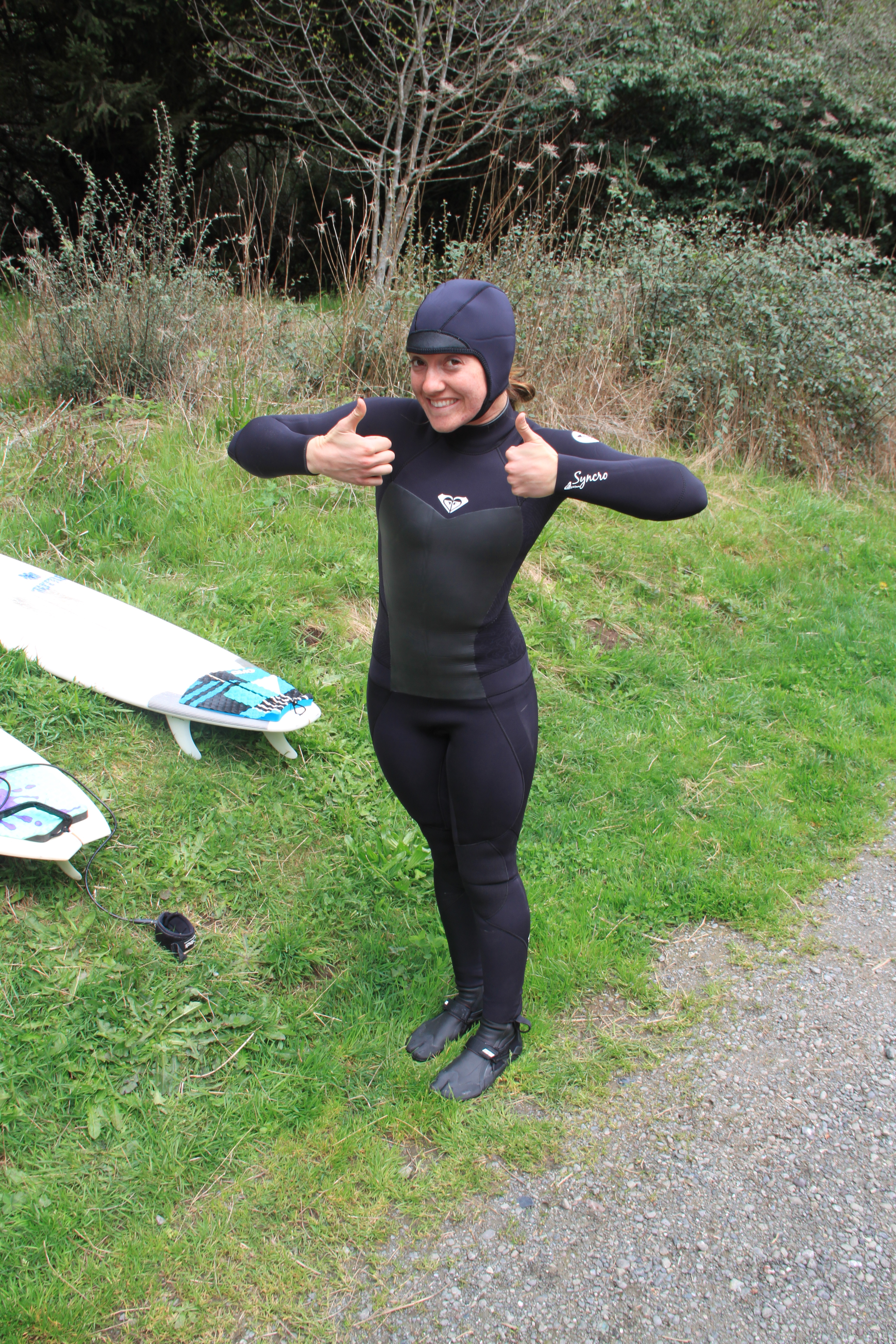
All things in this picture are necessary in Humboldt, Calif.

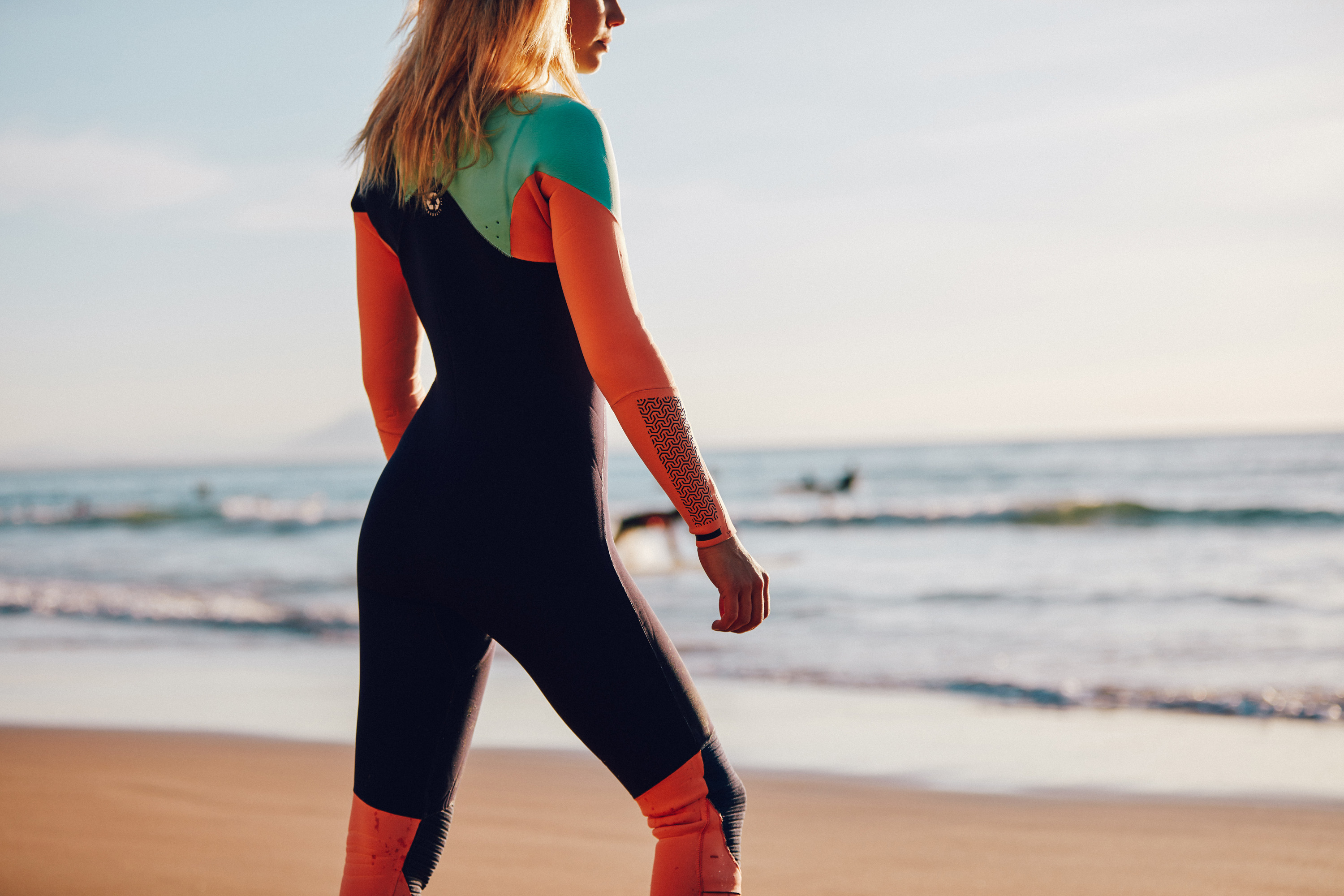
Among the plethora of brands, almost all of them come with a signature flex, feel and performance level. But what some might consider, as of late, is the touted term “eco-friendly.”

I originally wanted to find seven companies, but had to whittle it down to five that I thought used eco-friendly materials. BUT- based on my searching and many inquiries, I could only find three wetsuit companies who’s materials are eco-friendly.

Ironically, many of the products we use as surfers are, in fact, NOT good for the environment and yet, we have been cached into a ‘hippy-esque’ category. Everything from our sunscreen, to our surfboards and even our wetsuits somewhere down the processing line has a negative effect on our environment…until the last five years.

Eco-friendly is the new black and many marketing and branding campaigns have fallen into step with this attractive trend. There’s a lot to be said about this most hashtagged term when it comes to our marine environment and personal health.

But what does that mean when it comes to wetsuits?

To sum it up, wetsuit materials are most commonly comprised of closed cell neoprene, which basically translates to foam rubber. Their materials and processing tends to have an impact on the environment, and, thankfully, more surf and dive companies have been incorporating more environmentally-friendly processing and products into their suits.

Below are my top three wetsuits, which I based on overall production/processing and materials, wallet-friendly price and surfable functionality.


Patagonia

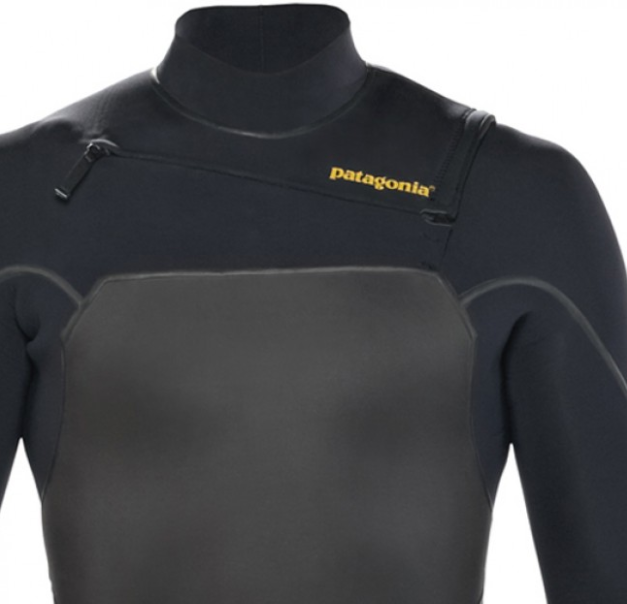
Patagonia's Yulex wetsuit

Patagonia’s Yulex wetsuit

Based In: Ventura, California

Mission: Build the best product, cause no unnecessary harm, use business to inspire and implement solutions to the environmental crisis.

Price Range: $129-$500

About: What started as a small company that made climbing tools is now one of the household names for environmentally-minded products for a wide range of outdoor activities like climbing, surfing, snowboarding, fly fishing and trail running. Patagonia’s goal, as a whole, is to reduce if not eliminate, pollution as a by-product of their business. They have successfully created a wetsuit by replacing non-renewable neoprene with a plant-based polymer, Yulex, a natural rubber from heva trees, which reduces CO2 emissions by 80 percent.


Picture

Photo Courtesy: Picture Organic Clothing

Photo Courtesy: Picture Organic Clothing

Based In:  France

Mission: Organic, recycled and bio-sourced products since 2009. The best possible environmentally-friendly and unique product designs that stand out for fresh colors and valued for good quality.

Price Range: $48.93-$352.88
*I did the math & converted euros to dollars–does not include shipping*

About: Their entire brand is dedicated to second-life and end-of-life products, which ranges from clothing, snowboard and skateboard gear and now, wetsuits and surf gear. It all started with their first recycled polyester boardshorts collection, which was derived from their snowboard outerwear and grew into European & international distribution, which includes the United States. Worried about carbon footprints? There’s an app for that, of course. Picture also has a carbon footprint calculator that allows you to trace your own impact when you buy their products.

There are currently no shops in the U.S. that offer this wetsuit brand right now. So, if you are interested in purchasing a suit, you might have to google around. In 2018 Picture’s clothing will be available in Confluence Kayak in Denver and Moose Joe and Paragon Sports in New York.

Everything is priced in Euros and don’t panic when you see a comma for pricing…it typically means a decimal. :)

Here’s a site that sells Picture Organic Clothing.


Vissla

ECOSEAS-DETAIL-3

Photo Courtesy: Vissla

Based In: Aliso Viejo, California

Mission: Advanced environmentally conscious materials designed and constructed for colder water.

Price Range: $99.95-$595.95

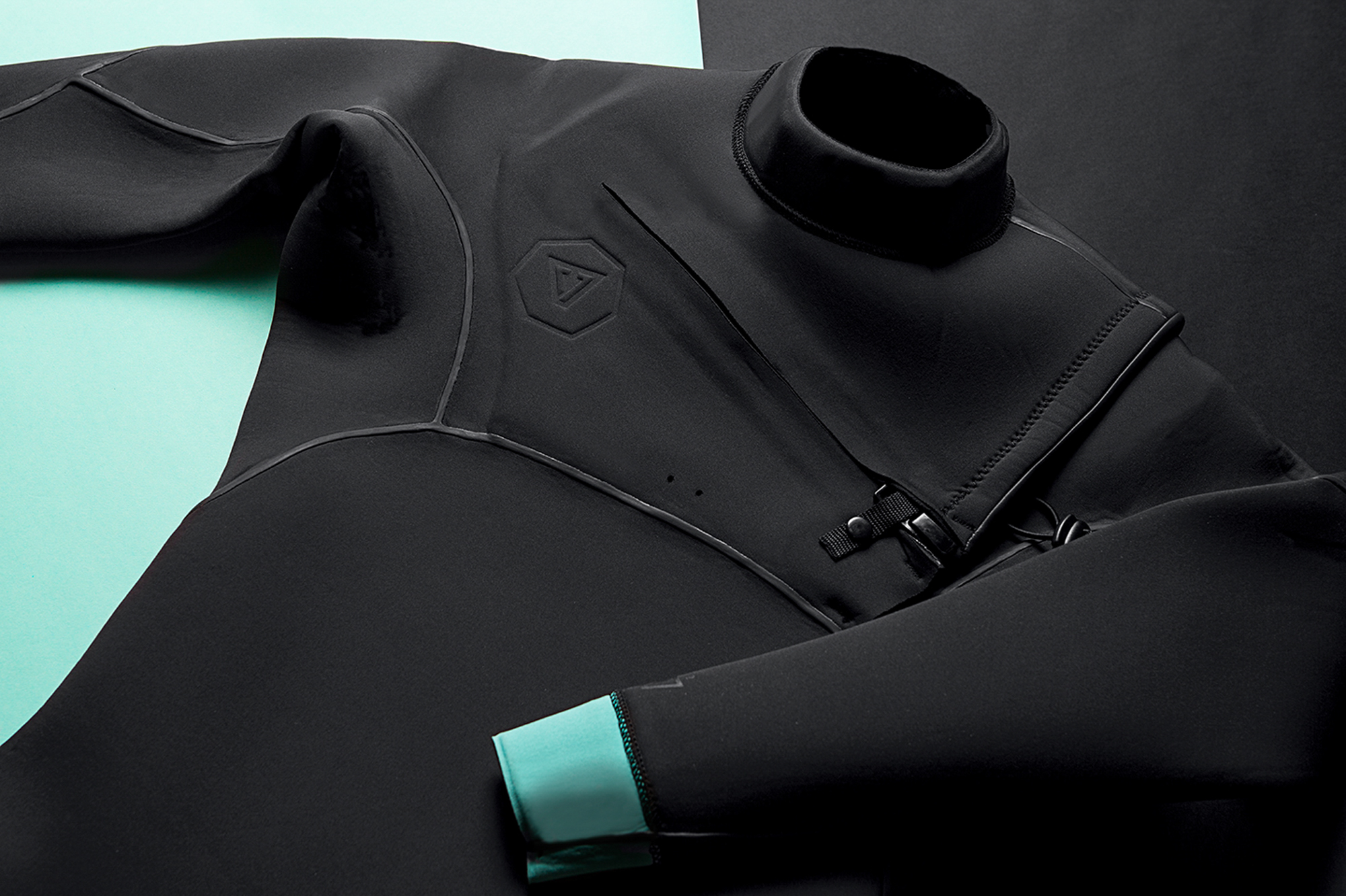
Just so you know: Vissla only offers wetsuits for men, for now. For ladies, their sister company, Amuse Society, features women’s suits and beach clothing, but the suits are not considered ‘environmentally-friendly,’ yet.

About: Vissla is a forward-thinking company who bases their designs and concepts around creative freedom–“a surf-everything, ride-anything mentality.” In terms of wetsuit-ery, they offer four different lines: 7 Seas, North Seas, Eco Seas and Premium Japanese. The Eco Seas wetsuit rubber is harvested from the rubber tree as opposed to neoprene and instead of solvent-based glues, Vissla uses a water-based glue that is completely solvent-free. Recycled plastic bottles serve as their interior and exterior jerseys–each wetsuits uses 45 recycled bottles.

Time of the Month: What Every Surfer Guy (and Gal) Should Know-PERIOD.

SC graffiti sign

Since the upsetting shark attack that occurred on April 29th at San Onofre’s Church break, there have been rumors circulating the lineup that the estimated 9-11-foot shark might have been drawn to the unsuspecting gal because she was on her period.

 All jokes and assumptions aside, no factual evidence was discovered, not even a drop.

In fact–read Surfline’s exclusive interview with the recovering victim here.

And since I’ve heard this hilarious rumor, most of the guys I happen to surf around seemingly shift their locations further away from me, which is great if I’m waiting for waves at the peak.

Hmmm, maybe I’ll finally paddle out to Lowers this summer. :D

[Paddles out to Lowers and yells in womanly agony: “Oh mah gah, these CRAMPS!!”]

While surfing at Salt Creek this past May, I not only noticed that everyone was huddled unusually close together at the peak, but I also noted that the topic of conversation was primarily about our infamous grey-suited landlord. Everyone’s ears seemed to perk up as each news development surfaced about the recent attack while a coast guard helicopter patrolled overhead.

Each person’s shifty eyes would widen as I paddled closer to the peak, until someone approached me mid-conversation and blurted:

“You notice how all of the attacks are on women? It’s because they’re on their period,” he jokingly said. “I’d not surf here if I were you. You could be putting everyone at risk.”

UM-what?

OH yes, my very educated friend, it’s true. Every woman you see in the lineup is just constantly bleeding–we are nothing more than swimming/paddling/surfing chum machines, and are using the ocean as our personal maxi pad. We purposefully decide to park it by you in hopes that one day our ocean animal friends will seek and destroy you, mwahahahahaha.

I CONFESS: In the middle of my dark inner monologue and lonely three foot bubble, I began to wonder…is it true? Does a woman’s fun “time of the month” necessarily attract sharks? I mean, we all have to wonder and at some point, I know we all HAVE wondered this borderline sexist thought.

“This is a misconception that a drop of blood drives sharks from miles away into a feeding frenzy,” said Dr. Chris Lowe, professor of marine biology and director of California State University-Long Beach’s Shark Lab. “Everybody who is in the water is exuding  many of the same amino acids that are found in blood. It doesn’t matter if you’re a man or woman, whether you’re having your period or not, you’re exuding many of the same compounds that a shark can detect.”

BOOM. Put that one to rest!  Dr. Lowe was recently featured in my piece: “Canary in the Coal Mine: Increase in Great White Shark Population is a GOOD Sign for Southern California

In addition to our male/female bodily …functions (?) being pretty much equal in the water, Dr. Lowe points out quantity, in this case, is also a factor to consider.

“The amount of blood a woman exudes during her period is miniscule,” said Dr. Lowe. “It’s not nearly enough to put an animal into that kind of feeding mode. So that’s very different from somebody who has a severe cut and is putting lots of blood into the water.”

Pictured is a juvenile great white shark off of Manhattan Beach. Photo credit: Cal State Long Beach Shark lab

Pictured is a juvenile great white shark off of Manhattan Beach.
Photo credit: Cal State Long Beach Shark lab

Additionally, menstrual blood is not really considered real “blood” that sharks interested in. According to Popular Science’s No, menstrual blood does not attract sharks, in addition to a shark like a great white’s ability to detect a trace amount of blood in only 100 liters of water (1/25,000th of an Olympic swimming pool!), even when sharks are snouting about, they are interested in marine mammal blood and guts–not ours.

Although it’s pretty inconclusive about what exactly sharks are inclined to attack in general, sharks have been documented to prefer sound instead of sight or smell, according to National Oceanic and Atmospheric Administration’s (NOAA) Northeast Fishery Science Center (NEFSC). For millions of years, sharks have been programmed to detect struggling prey and movement. Colors also play a role in a shark’s interest and there is a specific attraction to silver, white and yellow–the same colors as a shark’s prey.

I recall my friend Sean paddling out to a break in Humboldt–often known for it’s cold, rainy and sharky conditions. Shark encounters are more frequent near this area, as it’s located just north of the “Red Triangle” and instead of baby great white sharks, they get the big guys from our nightmares. Not quite megalodon proportions, but if you were to tell me marine biologists discovered one in this region, it wouldn’t surprise me.

Much like the topography, most whites cruising the Northern California coast are much much larger because they can handle the colder water temps, although, they do prefer the more temperate waters, such as most of the Californian, Australian and South African coastlines. In fact, fully developed great whites are warm bodied, so they can adjust to water temperatures.

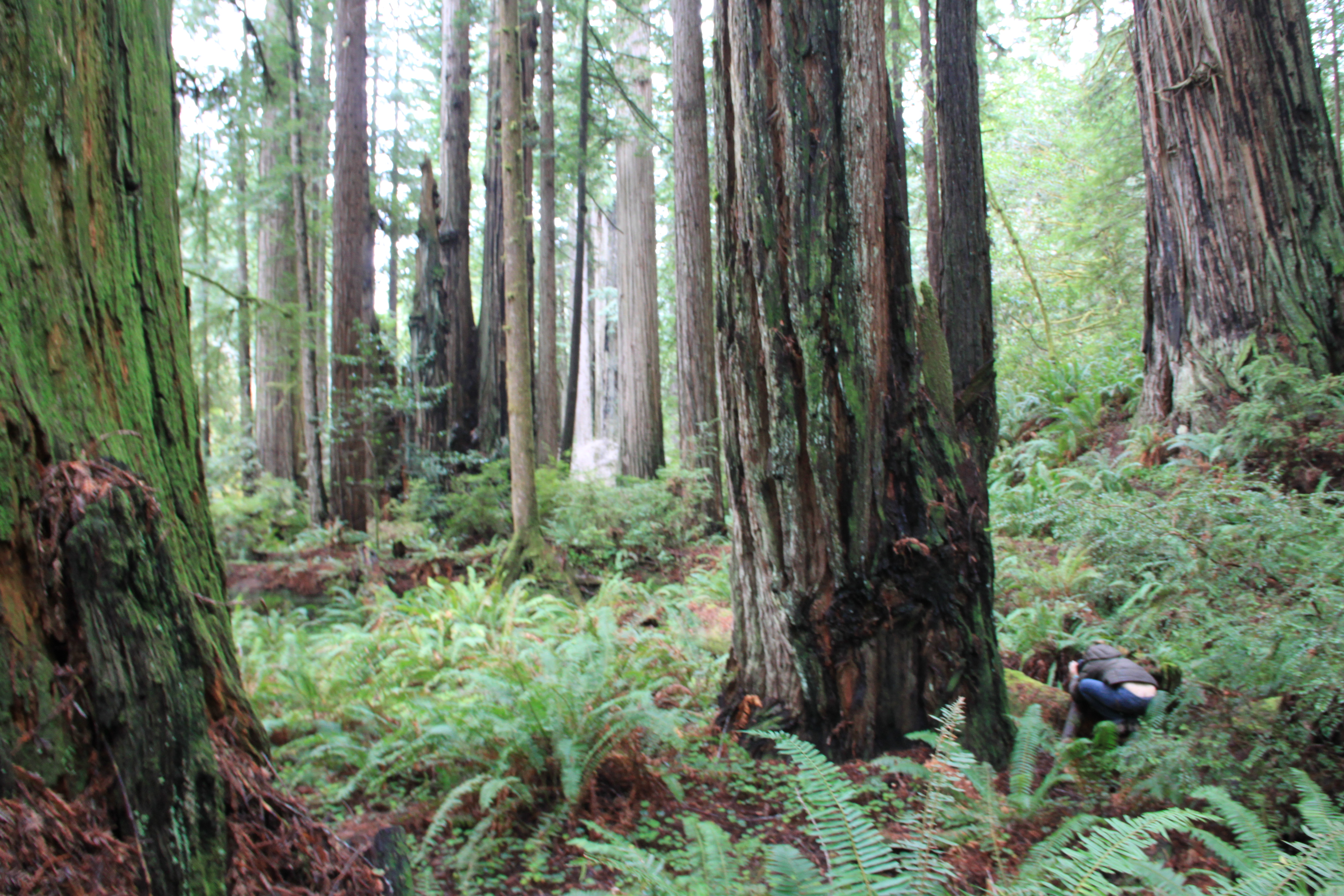
Humboldt Redwood forests galore! Try to find the hobbit in this picture.

Humboldt Redwood forests galore!

After my friend paddled out to aforementioned peak, a girl approached him in a panic and announced:

“I’m on my period!! Am I going to get attacked by a shark??”

I picture my salty friend rolling his eyes after this comment, maybe even chuckling a little.

To conclude: If you’re on the rag, it does not mean you or you’re surfing/swimming buddies are on the menu.

Seven Things That Will Help You Embrace Your Inner Surf Geek

In the days of old, the word “geek” hardly applied to the buff, bronzed and bitchin’ club that are surfers. However, thanks to many technological advancements, the surf community can now officially “geek out” with the rest of ’em.

Need a jumping off point? Here are seven items that will send you down the rabbit hole to geekdom–pocket protectors not included:wsl_logo


1. Join World Surf League’s Fantasy Surfer Create or join the wide-world of fantasy surf leagues.
This is where your supposed ‘extensive knowledge’ on the pro scene shows–so put up or shut up! Stuck behind a desk and several computer monitors all day? Put your browser on ‘in cognito’ mode and join, if you dare. If you have fellow aqua-junkie co-workers, start a private league and feel the froth on a daily, hourly and/or heat-by-heat basis. Wage wars, place bets, discuss Adriano’s board dims and the swell direction while sacrificing a proverbial goat to the WSL gods to dominate your league. The ultimate surf geek knows his shit in this arena–between wildcards, player injuries, swell angles and board shapes, there are so many factors to consider, besides, oh yea, WORK.

May the odds ever be in your favor.


2. Stalk Swell Charts
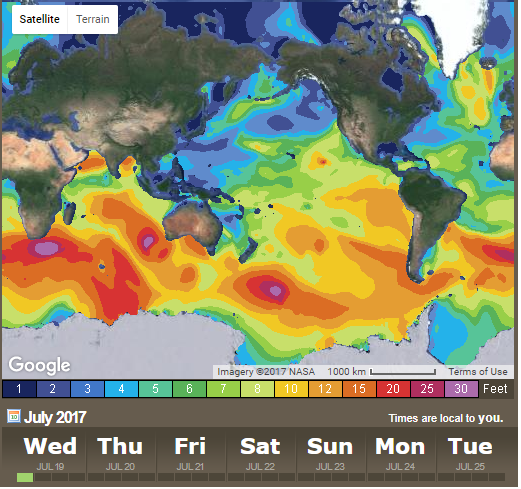
Capture…And swell angles for days. Swell direction and angles are tricky to decipher and when you throw bathymetry into the mix, uncovering that secret spot’s epic days can become an exact science. It takes some research, a little trial-and-error and patience. If you reeeeeally want to geek out, sign up for an oceanography course at your local community college. Soon you will be speaking in educated surfer tongues to your buddies in the lineup, muttering phrases like “It’s all about the 270 degrees out of the west, but only if there is a deep high tide that peaks at 12:51pm…” If they don’t realize it at first, they will soon understand that you are, indeed, actually SANE once that sneaker canyon set pops up at Blacks and all but you were caught inside.

Here are some great resources to get ya started:


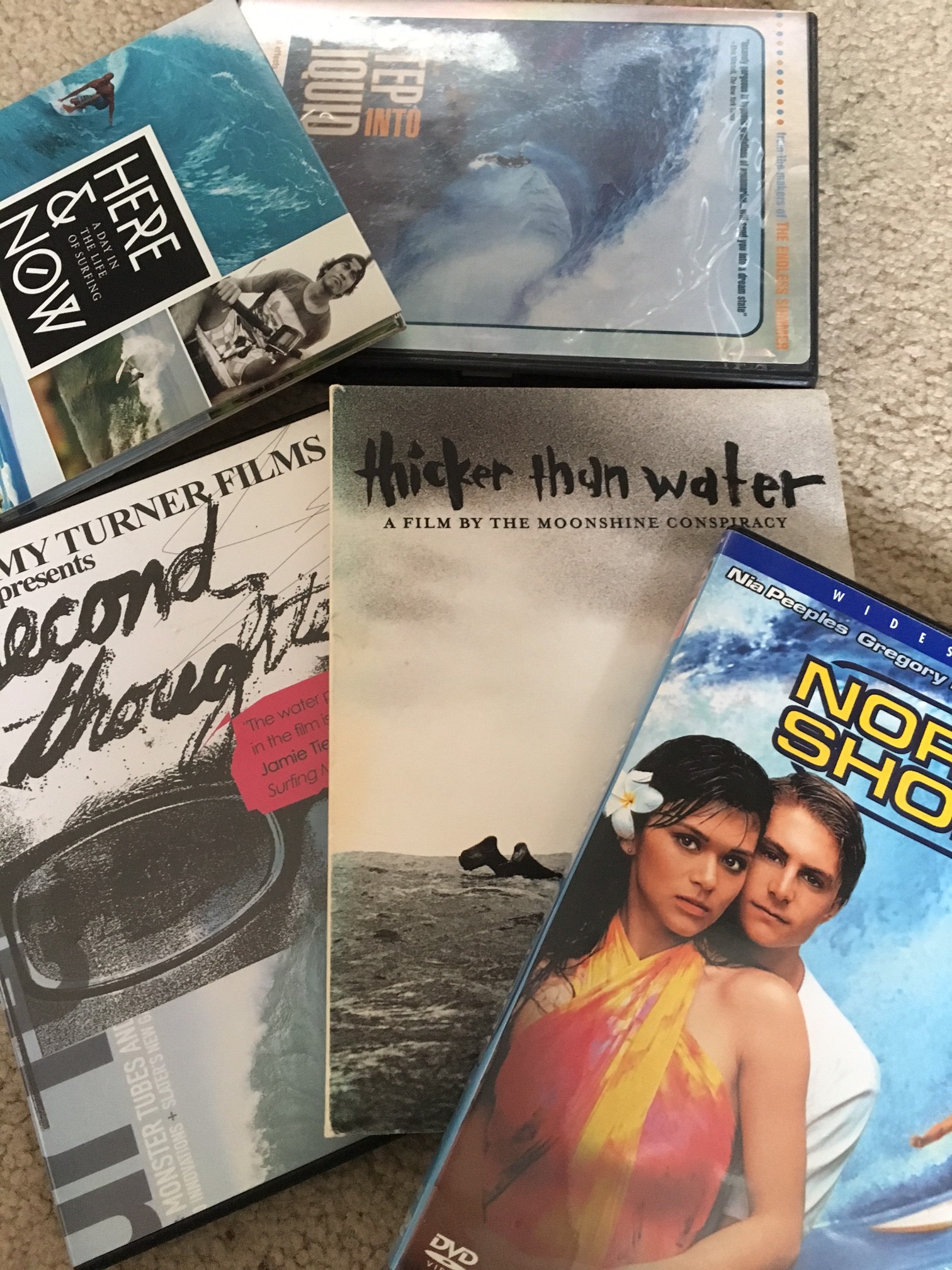
3. Become a Surf Film BuffIMG_0233

Begin with Bruce Brown’s cult classic film “The Endless Summer” or the 1987 favorite “North Shore” where Arizona wave pool surfer Rick Kane becomes a Hawaiian Pipe pro in the less than a month.

Enter: bottomless chasm of surf flicks

To state the obvious: your tastes largely depend on what you enjoy doing in the water. It’s a right of passage if you can stomach Hollywood’s damning stereotypes, too. From the 1960’s classic films to a generation defined by the movie “Momentum,” to hippie-esque Moonshine Conspiracy works like “Thicker Than Water,” to Dane Reynold’s abstract artsy fartsy films like “Modern Collective,” among many MANY other nitty gritty Volcom surf punk flicks that play on repeat at your local bars and surf shops–You can spend a good chunk of your life staring at backside hacks on slo-mo, if you haven’t already. YouTube is also another great resource to hunt for sick clips.

Just don’t forget to score some real tubes.


4. Read BooksHellllooo, homework!

Pick up a wha-? Before you send smoke signals out of your ears, relax. This is not your 9th grade English/Lit class. These are stories that you will actually enjoy reading and, maybe, recommend to your guys or gals. Once I picked up a surf book, they were very hard to put down…I’ve never been a very passionate reader, but this genre hit a major nerve. The next thing I knew, I had a bookshelf comprised of novels aside from the garden variety of  dusty Victorian literature that served as my doorstop/natural sleep aid in college.

Shortly after this discovery, my college essays became very interesting, I took a script writing class and excelled–And! Books in general became more enjoyable….even those Victorian snooze aids.

A few recommends, on my behalf:

5. Read Surfer Comic Books & Social Media 

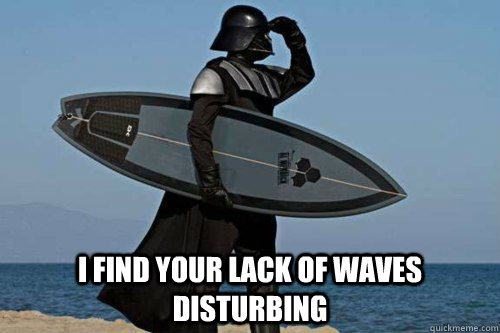
Funny-Surfing-Meme-I-Find-Your-Lack-Of-Waves-Disturbing-PhotoYES–they exist. As if a surfer’s life couldn’t be more customized according to this aqua obsession, we also have comics for surfers. If you’ve ever picked up a Surfer Mag between 1986 and 2006, you would have seen Wilbur Kookmeyer, an infamous blonde-haired buck-toothed boy kooking out via comic strip form. If comic books are your bag, start collecting Surfer Mags and watch Wilbur Kookmeyer’s wacky adventures unfold.

Memes are also not too far off from being sometimes hilarious.

AND! Robin Lanei, a really rad artist gal, is a must to follow on Insta. Her art’s messages will often leave me in stitches on a daily. Follow her: @robinlanei_art


6. Attend A ‘Boardroom’ Show

 Want to talk for hours to the professionals behind the board logos? Chat with those who have been working the foam and resin for the past decade about your

Terry template

thoughts on single fin/quad setups, how hand-shaping boards is a dying art (‘merica!), the evolution of the thruster, foam density, tails, that lingering 1/8 of an inch that gave you wobbles down the face of that one wave on that epic day…you get the drift. Canoodle with some pros and high profile shapers, like Al Merrick and those crazies at …Lost.  If you are a board shaping connoisseur, this is your Comic-Con.

Go forth, my surf geeks and let your froth be steady and right!


7. Get a Wetsuit for Every Water Temp

You would have absolutely no excuse to ever be out of the water, unless there was some kind of sewage spill or shark sighting. Even then, I’ve seen surfers chill in the lineup at Uppers while a 12-foot grey-suited landlord breaches right in front of the lot or score a filthy looking barrel at Newport’s River Jetties right after a rain–and I’m talking about brownish barrel cover-ups. YUCK. It’s your choice to bathe in hydrogen peroxide or surf with a steel cage. Although shark attacks are extremely rare (see my previous article), MRSA ain’t. Save the “filthy” verbiage for barrel exaggerations.

All things in this picture are necessary in Humboldt, Calif.

All two real excuses aside, no matter the condition, you are out there in the water–well-suited and ready to catch waves or shake hands with aforementioned landlord before he collects rent. There are suits for all shapes, sizes, budgets, and creative requirements. You can geek out for days Japanese rubber or laugh hysterically at the latest literal version of a wetSUIT and it’s price tag–> (see: Thom Browne’s $3,900 designer wetsuit ).

From a cool summer breeze fit for a wetsuit top to trekking through snowfall in your 6 mil, Vaseline covering your face…you come prepared.